

A 2026 study revealed that 40.2% of cartilage piercings develop complications like redness and swelling. If you're searching for how to get rid of piercing bump fast, you're likely feeling more anxious than empowered. It's natural to fear a permanent keloid, especially since professional medical injections for scarring can cost between $100 and $300 per session. You deserve a solution that restores your confidence and skin health without the clinical price tag.
We understand that your piercing is a vital part of your self-expression; seeing an itchy, painful bump feels like a frustrating setback. This guide provides the professional protocols to identify, treat, and permanently eliminate these irritations while protecting your skin. You'll learn why sterile 0.9% saline is your most effective tool, why harsh remedies like tea tree oil are now discouraged by the Association of Professional Piercers, and how to build a routine that leaves your skin flat and healthy.
Key Takeaways
- Differentiate between irritation, granulomas, and keloids by analyzing texture and color to ensure you're using the correct healing protocol.
- Identify how micro-trauma and the "aftercare paradox" of over-cleaning can stall your skin's natural recovery process.
- Follow our disciplined 5-step daily routine on how to get rid of piercing bump using sterile saline and restorative treatment oils.
- Swap risky DIY sea salt soaks for pH-balanced sterile sprays to remove debris without causing further skin friction.
- Ensure long-term skin health by prioritizing jewelry downsizing and using hypoallergenic materials like titanium for your piercings.
Identifying Your Piercing Bump: Irritation, Granuloma, or Keloid?
A piercing bump is a manageable tissue reaction caused by trauma or friction. It is your body's localized immune response to an interruption in the healing cycle. While it's easy to fear the worst, most bumps are fully reversible and stay confined to the immediate area of the jewelry. You aren't dealing with a permanent flaw; you're dealing with a symptom of irritation that can be resolved with disciplined care.
Understanding how to get rid of piercing bump formations starts with a careful visual assessment. Statistics from a 2026 study show that 40.2% of cartilage piercings experience some form of complication, so you're certainly not alone. To identify your specific issue, look for these three markers:
- Color: Irritation bumps are typically flesh-colored or pink, while granulomas appear deep red or raw.
- Texture: Irritation bumps feel soft and may weep clear fluid. Keloids and hypertrophic scars feel firm or rubbery.
- Location: Granulomas are particularly common in "wet" environments like the nose or mouth because they involve an overgrowth of blood vessels.
Acknowledging the risks of body piercing is the first step toward becoming a more informed collector. When you know what you're looking at, you can choose the right protocol to restore your skin's health.
The Keloid Myth: When to Truly Worry
True keloids are rare genetic overgrowths of scar tissue. They are distinct because they extend far beyond the original piercing site and continue to grow over time. In contrast, a hypertrophic scar stays localized and eventually flattens. As a Wise Guardian of your skin, you should observe the growth for 14 days. If the bump remains localized and responds to better aftercare, it isn't a keloid. Most people find that their "keloid" is actually just a stubborn irritation bump that needs a change in routine.
Red Flags: When to See a Professional
It's vital to distinguish between a "healing itch" and a true infection. While minor itching is a sign of regenerating tissue, an infection is a medical concern. Look for extreme heat, green or yellow discharge, or red streaks radiating from the site. If you experience these, or if you suspect an allergic reaction to low-quality metal, consult your piercer. They can often swap your jewelry for a longer post or a hypoallergenic material like titanium, which can resolve the issue before it requires clinical intervention.
The Root Causes: Why Your Piercing Is Reacting
Your body is a masterpiece of biological defense. When a piercing bump appears, it isn't an act of rebellion; it's a protective response to a perceived threat. Understanding the "why" behind the reaction is the most effective way to learn how to get rid of piercing bump issues before they become chronic. Most complications stem from micro-trauma, which occurs when a healing fistula is snagged, pulled, or compressed. If you sleep on a new helix piercing, the constant pressure forces the jewelry into an improper angle. This creates a "pressure bump" where the skin tries to cushion the impact of the metal.
Moisture also plays a significant role in tissue irritation. Areas like the nose and septum piercing sites are naturally prone to bumps because they stay damp. This environment can trap bacteria or lead to the over-proliferation of blood vessels, resulting in a raw-looking granuloma. To maintain stability, you must follow proper piercing aftercare that balances cleanliness with the skin's need for dryness. Over-cleaning is just as detrimental as neglect; scrubbing the area with harsh soaps disrupts the delicate cellular repair process, leading to the "aftercare paradox" where more effort yields worse results.
The Jewelry Factor: Materials and Threading
Low-quality materials are a frequent culprit for persistent irritation. Many generic pieces contain nickel-heavy alloys that trigger contact dermatitis, appearing as a red, itchy bubble. We recommend using hypoallergenic Titanium or Surgical Steel to provide a stable environment for your skin. The mechanical design of the jewelry matters just as much as the metal. Externally threaded bars have "screw" ridges on the post that can scrape the inside of your piercing like a saw blade. Choosing internal threaded labret studs ensures the smooth part of the bar passes through the tissue, preventing the microscopic tears that lead to bumps.
Friction and 'The LITHA Method'
The LITHA method, or "Leave It The Hell Alone," is a cornerstone of professional healing. Every time you rotate your jewelry or check the bump with your fingers, you introduce bacteria and mechanical stress. Hair products, perfumes, and cosmetics are also significant irritants for ear and facial piercings. These chemicals can seep into the wound, causing chemical burns or clogged pores around the site. By minimizing contact and allowing your body's natural defenses to work, you create the quiet environment necessary for the tissue to flatten and heal.
The Healing Hierarchy: Saline Soaks vs. Treatment Oils
When you're searching for how to get rid of piercing bump symptoms, you'll likely encounter a flood of conflicting advice. Effective healing requires a disciplined hierarchy of care that prioritizes sterility first and tissue conditioning second. Your body's recovery process is delicate. We believe in a philosophy that is healthy, safe, and effective. This "Rule of Three" ensures that every product you apply supports cellular repair rather than causing further chemical trauma. Professional protocols have shifted significantly toward sterile, pre-packaged solutions because they eliminate the guesswork and contamination risks of home-brewed remedies.
A major pitfall in at-home care is the DIY sea salt soak. While it seems cost-effective, mixing salt and water in a kitchen environment often leads to a solution that is too concentrated or unsterile. This can dehydrate the skin and exacerbate the very bump you're trying to heal. Modern standards for identifying and treating piercing bumps emphasize the use of 0.9% sodium chloride. This specific concentration mimics the body's natural fluids, allowing the wound to stay hydrated while gently flushing away debris.
Sterile Saline: The Gold Standard
Sterile saline spray is the foundation of modern aftercare. It provides a touch-free way to cleanse the area without introducing bacteria from your hands or cotton balls. For ear or facial piercings, a gentle misting twice daily is sufficient. If you have a stubborn bump with heavy crusting, you can perform a "soak" by saturating a sterile gauze pad and holding it against the site for five minutes. Never use contact lens solution for this purpose. It contains preservatives and lubricants designed for the eyes that are far too irritating for a healing fistula.
Therapeutic Oils: Jojoba and Rosehip
Once the area is clean and the initial inflammation has subsided, therapeutic oils act as a secondary step to soften the tissue. Jojoba oil is a powerhouse in this category because it closely mimics human sebum. This allows it to penetrate deeply, providing moisture that prevents the bump from becoming dry and brittle. Rosehip oil complements this by promoting skin regeneration and reducing the appearance of persistent redness. For those managing stretched ears, using a dedicated gauges balm provides the necessary elasticity to prevent micro-tears. Be wary of using tea tree oil "neat" or undiluted. While it has antiseptic properties, applying it directly to an open wound can cause chemical burns that delay healing for weeks.
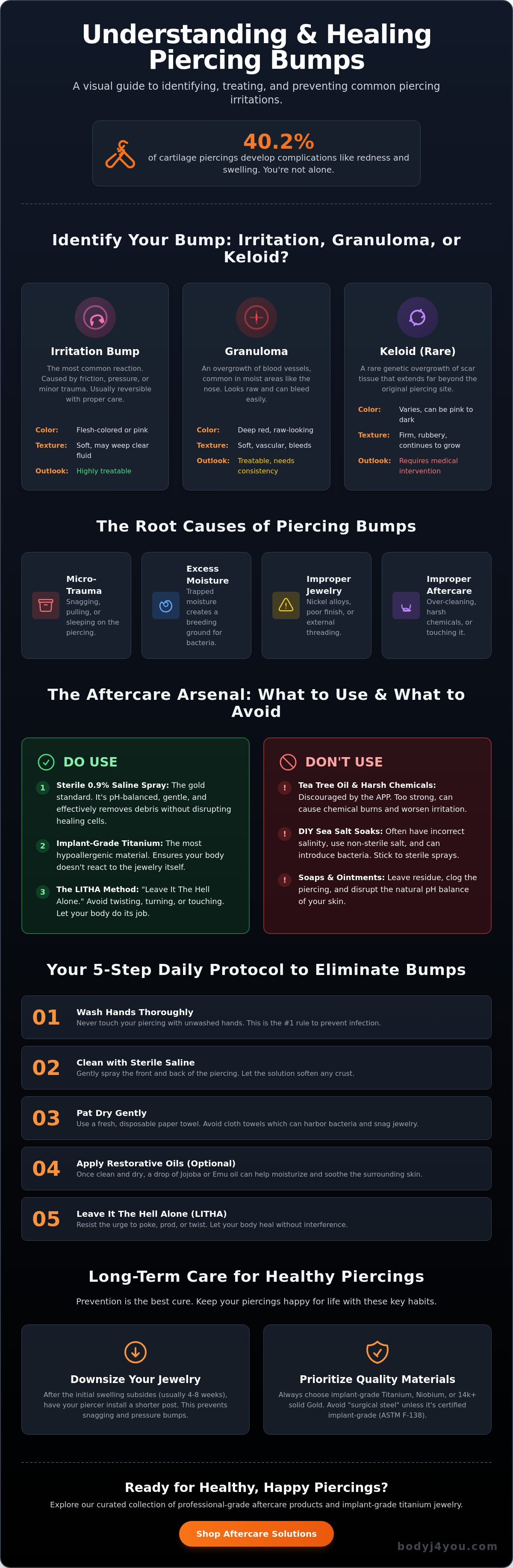
Your 5-Step Daily Protocol to Eliminate Bumps Safely
A cohesive daily routine transforms a reactive piercing into a healthy one. While random internet tips often suggest aggressive treatments, a professional approach focuses on stability and cellular support. If you've been struggling with how to get rid of piercing bump tissue, consistency is your most powerful tool. This 5-step protocol is designed to be healthy, safe, and effective, providing a structured path to recovery that respects your skin's biological needs.
- Step 1: Cleanse. Mist the area with a sterile saline spray. This gently flushes away "crusties" and debris without the need for painful friction or manual picking.
- Step 2: Dry. Thoroughly remove all residual moisture. Use a disposable paper towel or a hair dryer on a "cool" setting to ensure the environment remains stable.
- Step 3: Soften. Apply a targeted treatment oil. This step helps to condition the hypertrophic tissue, making it more pliable and receptive to healing.
- Step 4: Assess. Evaluate your jewelry fit. If the post is too short, it will compress the bump and worsen the irritation; you may need a longer bar to accommodate the swelling.
- Step 5: Protect. Shield the site from environmental stressors. Keep your hair tied back, sanitize your phone screen daily, and use a travel pillow to avoid sleeping directly on the piercing.
Following this disciplined routine provides the quiet environment your body needs to downregulate its immune response. By combining sterile cleansing with targeted nourishment, you address both the cause and the symptom of the irritation. Level up your aftercare routine by using our professional-grade saline and oil kits to ensure your skin receives the highest quality ingredients.
The 'Cool Dry' Technique
Moisture is often the hidden culprit behind stubborn granulomas. When water gets trapped in "pockets" behind the ear or inside the nostril, it creates a stagnant environment that encourages tissue overgrowth. We strongly advise against using cloth towels. These harbor bacteria and have tiny loops that can snag your jewelry, causing fresh micro-trauma. For precision, use piercing cleaning swabs to pat the area dry. These tools offer the control needed to reach tight spaces without disturbing the fistula.
Compression Therapy at Home
Gentle, consistent pressure can help flatten a raised bump by restricting the blood flow that feeds the excess tissue. "No-Pull" silicone discs are a common tool for this, providing a soft barrier between the jewelry and the skin. However, as a Wise Guardian of your skin, you must exercise caution. Never force a compression disc onto a piercing that shows signs of active infection, such as extreme heat or yellow discharge. Compression should feel like a firm hug for your skin, not a source of new pain.
Prevention and Long-Term Care for Healthy Piercings
Your piercing is a powerful statement of identity and a significant investment in your aesthetic journey. Supporting that investment requires a transition from reactive treatment to proactive, long-term care. While the immediate goal is learning how to get rid of piercing bump tissue, the ultimate victory is maintaining a flat, healthy fistula for years to come. This stability is rooted in biological wellness. A robust immune system, fueled by consistent sleep and proper hydration, provides the cellular energy needed to finalize the healing process. When your body is resilient, your skin recovers from minor snags or environmental stress with much greater speed.
Quality materials are the non-negotiable foundation of piercing longevity. We prioritize hypoallergenic metals like Titanium and Surgical Steel because they offer the chemical stability required for reactive skin. This is especially critical for those using ear stretching kits, where the skin is under constant tension. Using porous or low-grade materials during a stretch can lead to micro-tears and stubborn irritation. By choosing expert-crafted jewelry, you eliminate the risk of contact dermatitis and provide your body with a safe, inert environment to thrive.
Downsizing: The Forgotten Step
Professional piercers initially install longer jewelry to accommodate the natural swelling that follows the procedure. However, once that initial inflammation subsides, usually within a 4-8 week window, that extra length becomes a liability. A post that is too long will "tilt" or snag on your hair and clothing. This constant movement creates uneven pressure on the wound, which is a primary reason many people struggle with how to get rid of piercing bump recurrences. Visiting a professional for perfectly fitted, downsized jewelry is the most effective way to ensure your piercing sits flush against the skin, offering both health benefits and a cleaner, more refined aesthetic.
The BodyJ4You Quality Promise
BodyJ4You stands as a Wise Guardian for your skin, drawing on over twenty years of experience in the body modification industry. We believe that aftercare should be as intentional as the jewelry itself. Our products are Born in the USA, ensuring rigorous quality control and adherence to the highest manufacturing standards. We are committed to purity, utilizing vegan, cruelty-free, and organic ingredients that nurture your skin without the use of harsh synthetic additives. This disciplined approach to skincare is why we are trusted by thousands of collectors worldwide. Level up your aftercare with our Piercing Bump Treatment Oil and experience the difference that expert-crafted, wellness-oriented care makes for your self-expression. Crafted by Experts. Trusted by Thousands. Rooted in Care.
Reclaim Your Skin’s Health Today
You now possess the professional roadmap to identify irritation, eliminate micro-trauma, and restore your skin's natural aesthetics. Learning how to get rid of piercing bump formations is a journey of patience and disciplined care. By prioritizing sterile 0.9% saline and avoiding harsh DIY remedies, you protect the integrity of your modification. It’s essential to remember the importance of downsizing your jewelry within that critical 4-8 week window to prevent recurring pressure. This simple adjustment ensures your piercing stays flush and stable.
BodyJ4You supports your self-expression with products rooted in clinical safety. Our solutions feature USDA Certified Organic ingredients and are backed by over 20 years of industry experience. We take pride in being a stabilizing force for your skin’s well-being. Crafted by Experts. Trusted by Thousands. Rooted in Care. Shop our Expert-Crafted Piercing Bump Treatment Oil and give your body the premium care it requires. Your piercing is a masterpiece in progress; stay consistent and watch your skin thrive.
Frequently Asked Questions
How long does it take for a piercing bump to go away?
Most irritation bumps resolve within 2 to 6 weeks when you follow a disciplined aftercare routine. This timeframe aligns with the standard 28 day human skin regeneration cycle. If you are focused on how to get rid of piercing bump tissue, consistency is vital. You must remove the source of irritation, such as poor jewelry or sleeping on the site, to see significant flattening within this period.
Can I pop a piercing bump if it looks like a pimple?
You should never attempt to pop or squeeze a piercing bump. These are not standard pimples; they are often localized immune responses or fluid-filled pustules. Breaking the skin introduces bacteria and causes fresh micro-trauma to the healing fistula. This aggressive action can lead to permanent scarring or secondary infections, which affected 23.8% of earlobe piercings in a 2026 clinical study.
Should I take my jewelry out if I have a bump?
Keep your jewelry in place unless a professional piercer or doctor advises otherwise. Removing the jewelry can cause the piercing hole to close, potentially trapping an infection inside the tissue. If the bump is caused by a metal allergy, have a professional swap the piece for hypoallergenic titanium. Maintaining the channel allows for proper drainage and supports the long-term integrity of your self-expression.
Is tea tree oil safe for piercing bumps?
Professional guidelines from 2026 advise against using undiluted tea tree oil on healing piercings. It's often too harsh for wounded skin and can cause chemical burns or extreme dryness. These reactions frequently exacerbate the bump rather than healing it. It is much safer to use a formulated treatment oil that combines restorative ingredients like jojoba or rosehip in a balanced, non-irritating concentration.
What is the difference between a piercing bump and an infection?
A piercing bump is typically a localized irritation, while an infection involves systemic red flags. Irritation bumps are often pink or flesh-colored and may itch. In contrast, an infection presents with extreme heat, radiating red streaks, and thick yellow or green discharge. If you experience fever or chills alongside these symptoms, seek medical attention immediately, as infections required antibiotics in 2.7% of cartilage cases in 2026.
Can a piercing bump be caused by my jewelry being too tight?
Yes, jewelry that is too short is a primary cause of "pressure bumps." When a post does not allow for natural swelling, it compresses the tissue and restricts blood flow. This mechanical stress triggers the body to produce excess scar tissue as a protective cushion. Ensuring your jewelry has a slightly longer post during the initial healing phase is a healthy, safe, and effective way to prevent this.
Do piercing bumps go away on their own?
Piercing bumps rarely disappear without intervention because they are a response to a specific trigger. If you don't address the underlying cause, such as friction or low-quality metal, the bump will likely persist or grow. When you're learning how to get rid of piercing bump symptoms, the first step is always identifying the irritant. Once the source of trauma is removed, your body can finally begin the natural flattening process.
How do I know if my piercing bump is a keloid?
A true keloid is a firm, rubbery growth that extends beyond the original boundaries of the piercing. Unlike irritation bumps, keloids are genetic and do not flatten with standard aftercare. Most bumps are actually hypertrophic scars, which stay localized to the piercing site and respond well to treatment oils. If a growth continues to expand significantly over several months, consult a dermatologist for a professional clinical diagnosis.


