

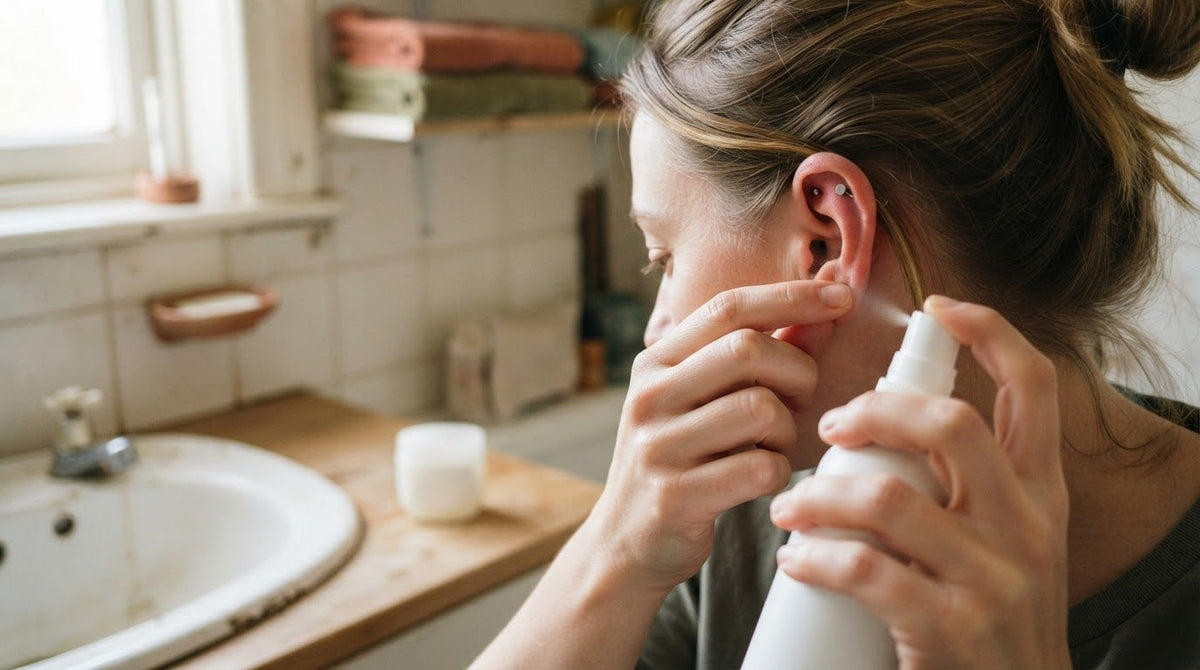
A greasy barrier isn’t the gentler choice for a fresh piercing. If you’re asking, “Can I use Vaseline on my new piercing?” the short answer is no. Petroleum jelly may limit oxygen reaching healing tissue and trap bacteria around the opening. Use gentle saline care instead, and keep ointments away from the piercing and jewelry.
It’s natural to want to soothe a tender new piercing while it heals. Some crusting can form around the outside, and mild, occasional bleeding may occur during the first several days. This guide explains what healing can normally look like, how to clean a piercing gently, and which products to avoid. You’ll also find practical aftercare steps, with saline at the center of a simple routine that cleans the area without adding a heavy barrier.
Key Takeaways
- Skip Vaseline on a fresh piercing; a greasy barrier may interfere with healing and trap bacteria around the opening.
- Clean gently with mild, fragrance-free cleanser and water, then rinse away any residue.
- Wash your hands before touching the piercing or applying aftercare to help keep unwanted germs away.
- Use saline as a simple aftercare option, and learn which signs of healing are expected versus worth attention.
1. Avoiding hydrogen peroxide and antibacterial soaps
A fresh piercing is healing tissue, so harsh cleaners can irritate it rather than help. Hydrogen peroxide may dry the wound and irritate or damage tissue inside the piercing. Rubbing alcohol can also dry and aggravate the area. Keep both out of your cleaning routine, including around the jewelry openings.
Skip antibacterial soaps, Betadine, and Bactine for piercing aftercare. These products can be too strong for a healing piercing and may dry the surrounding skin. Dry, irritated skin can make routine cleaning uncomfortable and complicate care. Choose a mild, fragrance-free cleanser instead, and rinse it thoroughly from the piercing.
Keep petroleum jelly, including Vaseline, away from the piercing channel and jewelry. Its thick barrier may limit oxygen reaching healing tissue and trap bacteria near the opening, potentially increasing infection concerns. A heavy layer can also clog the area. Don’t push it into either opening or coat the jewelry with it.
Other popular products can also cause problems. Tea tree oil may dry the skin around a healing piercing, and concentrated tea tree oil may burn when applied there. Even if it seems to reduce a fluid-filled bump, that doesn’t make it a suitable substitute for gentle aftercare.
Keep the routine simple: clean with mild, fragrance-free cleanser and water, rinse away residue, and avoid adding ointments or strong antiseptics. If crust forms outside the opening, don’t scrape it off; it can help protect the inner area as it heals. Ongoing soreness, redness, swelling, or yellowish discharge may signal infection and deserves attention.
Avoid Vaseline on a new piercing. Petroleum jelly may trap bacteria and limit oxygen reaching healing tissue. Don’t apply it around the opening or to the jewelry; choose gentle cleansing instead.
2. Washing with mild, fragrance-free cleanser and water
Wash a new piercing with clean water and a mild, fragrance-free cleanser once daily. Fragrance-free products are less likely to bother sensitive skin around a fresh opening. A gentle wash removes everyday residue without adding a strong antiseptic. Follow any specific aftercare directions for your piercing.
Start by washing your hands, then wet the piercing with clean water. Gently apply a small amount of cleanser around the opening and nearby skin. Don’t scrub, twist the jewelry, or force soap into the piercing channel. A light touch cleans the area without unnecessary friction against healing tissue.
Rinse thoroughly after washing. Soap left around the opening can irritate the skin, so let clean water flow over both sides of the piercing until no cleanser remains. For example, rinse the front and back of an earlobe piercing, not just the visible side. Avoid leaving cleanser on the jewelry, too.
Clean once daily rather than repeatedly washing the area throughout the day. Extra washing can dry or irritate skin, especially if you use too much cleanser or scrub. If sweat or residue collects between washes, rinse gently with water instead of using soap again. Keep the area clean without overworking it.
After rinsing, leave the piercing free from makeup, creams, and other products that can collect around the opening. Keep clothing, hair, and accessories from rubbing against the jewelry where possible. Continue gentle daily care while the piercing heals; healing time varies by piercing location, so don’t stop care just because the outside looks settled. A clean rinse and light wash are the essentials.
3. Handwashing before touching a piercing
Wash your hands thoroughly before touching a new piercing, its jewelry, or nearby skin. Hands pick up residue from phones, door handles, and hair, then transfer it to the healing area. Clean hands help reduce the chance of introducing germs that may contribute to infection. Make handwashing part of every cleaning session.
Use soap and running water, washing your palms, the backs of your hands, and between your fingers. Pay attention to your fingertips and around your nails, which may touch the piercing opening while you clean it. Rinse away the soap, then dry your hands with a clean towel before touching the jewelry.
Wash again if you touch something between cleaning your hands and tending to the piercing. For example, if you handle your phone after washing, clean your hands again before touching an earlobe stud or wiping around the opening. Do the same after brushing hair away from a cartilage piercing. This keeps everyday surfaces out of your aftercare routine.
Keep contact purposeful. Touch the area only when cleaning or following care instructions, rather than checking, turning, or moving the jewelry out of habit. Each extra touch creates another opportunity to transfer residue or irritate tender tissue. If you need to adjust clothing or hair near the piercing, wash your hands first and avoid pressing fabric against the opening.
Wash your hands before applying saline or using a clean swab. Don’t dip your fingers into a container or reuse a swab that has touched the piercing. Set out the items you need before washing so you can complete your routine without handling unrelated objects. This keeps clean hands, aftercare supplies, and the piercing separate.
4. Saline solution for piercing aftercare
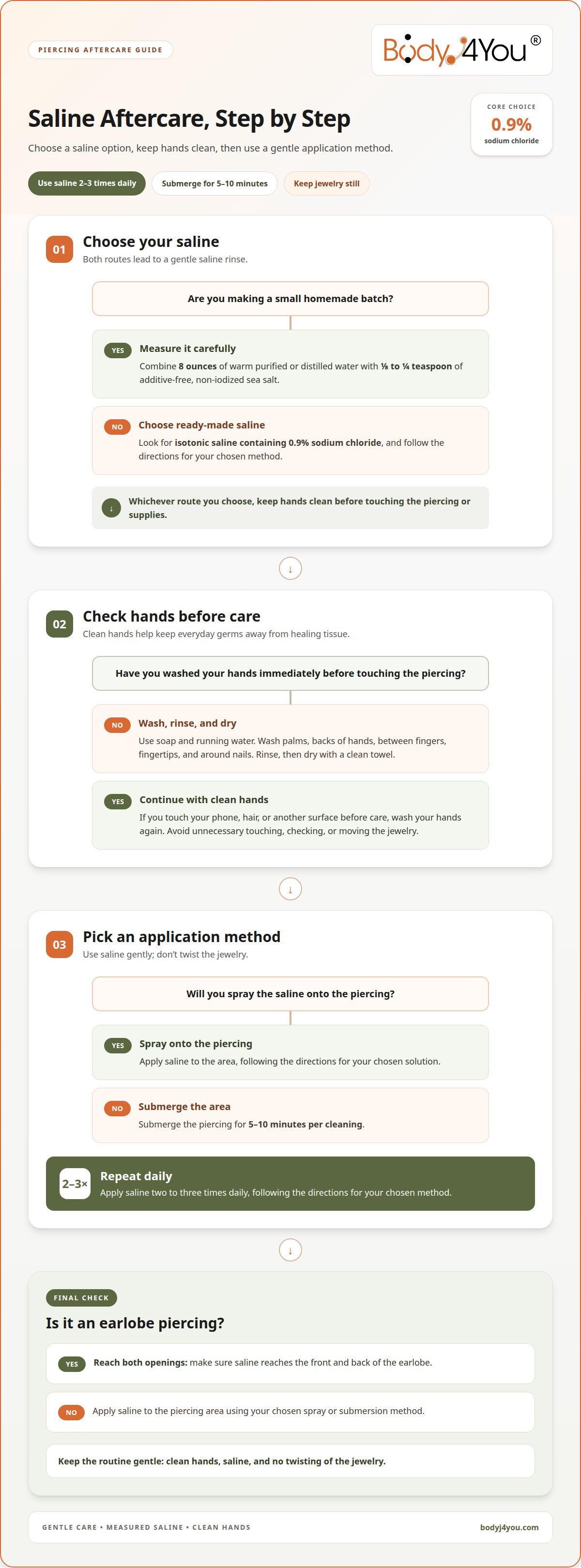
For body and ear piercing aftercare, choose isotonic saline containing 0.9% sodium chloride. Its salt concentration matches the body’s normal fluids, making it a straightforward option for rinsing a healing piercing. Saline supports a simple routine without the harshness of strong antiseptics or the heavy residue of ointments.
Apply saline two to three times daily, following the directions for your chosen method. Spray it onto the piercing or submerge the area for five to ten minutes per cleaning. For an earlobe piercing, make sure saline reaches both the front and back openings. Keep your hands clean, and avoid twisting the jewelry while saline loosens surface residue.
Ready-made saline offers a practical option, while homemade saline requires careful measuring and clean handling. For a small batch, combine eight ounces of warm purified or distilled water with one-eighth to one-quarter teaspoon of additive-free, non-iodized sea salt. Too much salt can irritate the piercing, so measure rather than estimating.
For a larger batch, mix one gallon of distilled water with four level teaspoons of additive-free, non-iodized sea salt. Allow homemade saline time for the salt to dissolve fully before using it. Store it in the refrigerator when it’s not in use, and discard it after thirty days.
Keep saline care focused: apply it to the piercing, let it reach the openings, and avoid adding oils or creams afterward. Tea tree oil can dry healing skin, so saline is the gentler choice for routine cleansing. Consistent use, clean hands, and careful measuring help keep aftercare simple while the piercing heals.
BodyJ4You: Acrylic Ear Stretching Kit
The Acrylic Ear Stretching Kit from BodyJ4You is for readers exploring ear stretching, not cleaning a fresh piercing. Keep stretching separate from new-piercing aftercare; a healing opening needs gentle cleaning and time, not a taper or plug. For routine saline care, BodyJ4You’s Saline Piercing Aftercare Spray offers a product suited to that part of your routine.
If you’re interested in stretching, consider an ear stretching kit only when your ear is ready for that separate process. Stretching jewelry won’t address irritation or a possible infection. Focus on appropriate cleaning, avoid unnecessary touching, and seek medical care for worsening symptoms.
Visit BodyJ4You to explore its piercing aftercare and ear-stretching offerings.
Keep your healing routine simple
Your next step is consistency, not adding more products. Let the piercing settle without unnecessary touching, and pay attention to changes rather than judging healing by appearance alone. If you’re still wondering, “Can I use Vaseline on my new piercing?” keep petroleum jelly out of your routine and follow gentle aftercare suited to the piercing.
Increasing redness, swelling, soreness, or yellowish discharge can be signs of infection. If these symptoms appear or worsen, seek appropriate medical care instead of trying to manage them with oils or ointments. For everyday saline care, BodyJ4You offers a Saline Piercing Aftercare Spray as an option to explore.
Explore piercing aftercare at BodyJ4You and choose a routine that gives your new piercing room to heal. Small, careful habits can support your self-expression as it settles in.
Frequently Asked Questions
What can you expect as normal for a healing piercing?
A small amount of on-and-off bleeding during the first several days can occur, and crust may collect outside the opening. That crust helps protect the inside and retain moisture while healing. Leave it in place rather than picking or scraping it away. Watch for changes: increasing soreness, redness, swelling, or yellowish discharge may signal infection rather than routine healing.
Is Vaseline safe to use on a new piercing?
No. If you’re asking whether you can use Vaseline on your new piercing, don’t apply it inside the opening or onto the jewelry. Petroleum jelly may form a barrier that limits oxygen reaching healing tissue and traps bacteria nearby. If the surrounding skin feels dry, stick with gentle cleansing rather than coating it with a thick ointment.
What should you use to clean a new piercing?
Use a mild, fragrance-free cleanser and water, or sterile isotonic saline for piercing aftercare. Choose one gentle method at a time; don’t add hydrogen peroxide, rubbing alcohol, or strong antiseptics to the routine. For example, saline can be applied as a spray or used to soak the area. Follow aftercare directions suited to the piercing’s location.
How do you care for a new piercing while it heals?
Keep jewelry in place and avoid turning or removing it during routine care. A piercing can shrink or close quickly after jewelry comes out, making reinsertion difficult. Touch the area only for cleaning, and wash your hands first. Because ear, oral, and other piercings differ, follow care instructions suited to the piercing type.
Can petroleum jelly trap bacteria or slow piercing healing?
Yes. Petroleum jelly may trap bacteria around a piercing and limit oxygen reaching healing tissue. Avoid putting it on the jewelry or inside either opening, where it can collect against the channel. If you’ve already used it, don’t dig at the piercing to remove residue; clean gently with your usual mild cleanser or saline.
What are signs of an infected or irritated piercing?
Soreness, redness, swelling, or yellowish discharge around the piercing may indicate infection. Raised skin can also be a sign that a keloid scar is developing. These signs don’t identify the cause on their own, so note whether they’re worsening or accompanied by discharge. Seek medical care for concerning changes, and avoid treating the area with oils or harsh cleaners.


