

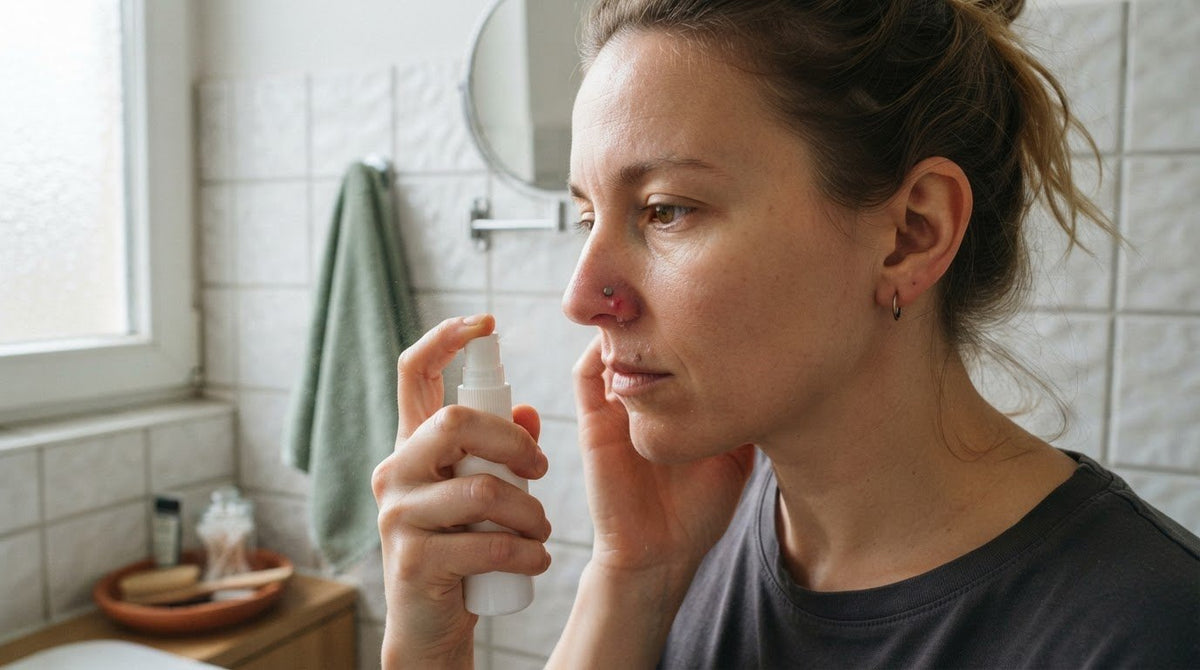
Taking the jewelry out may seem like the quickest fix, but if a piercing is infected, removing it can cause the opening to close and trap the infection. To learn how to soothe an irritated piercing, keep the jewelry in place while you assess what’s happening and use gentle care, such as sterile saline.
It’s understandable to worry when a piercing becomes red, tender, or bumpy. Some sensitivity and mild crusting can occur during healing, but increasing warmth, pain, or swelling, or yellow or green discharge, may signal an infection. A persistent raised bump can have another cause, so distinguish irritation from infection or a keloid before deciding what to do next.
Here, you’ll find four practical ways to calm irritation, signs that call for medical attention, and guidance on whether to leave the jewelry in. You’ll also learn when advice from a healthcare professional or piercer matters, so you can care for the piercing without adding unnecessary stress or irritation.
Key Takeaways
- If you suspect an infection, leave the jewelry in place and seek medical advice rather than removing it yourself.
- Increasing warmth, pain, swelling, redness, or yellow or green discharge can point to infection; some tenderness and pale crusting may occur during healing.
- Use gentle sterile saline care and avoid twisting the jewelry or over-cleaning, which can add irritation.
- Get professional advice if symptoms worsen or persist, or if swelling causes the jewelry to sink into the skin.
1. Can I just take the jewelry out if the piercing is irritated?
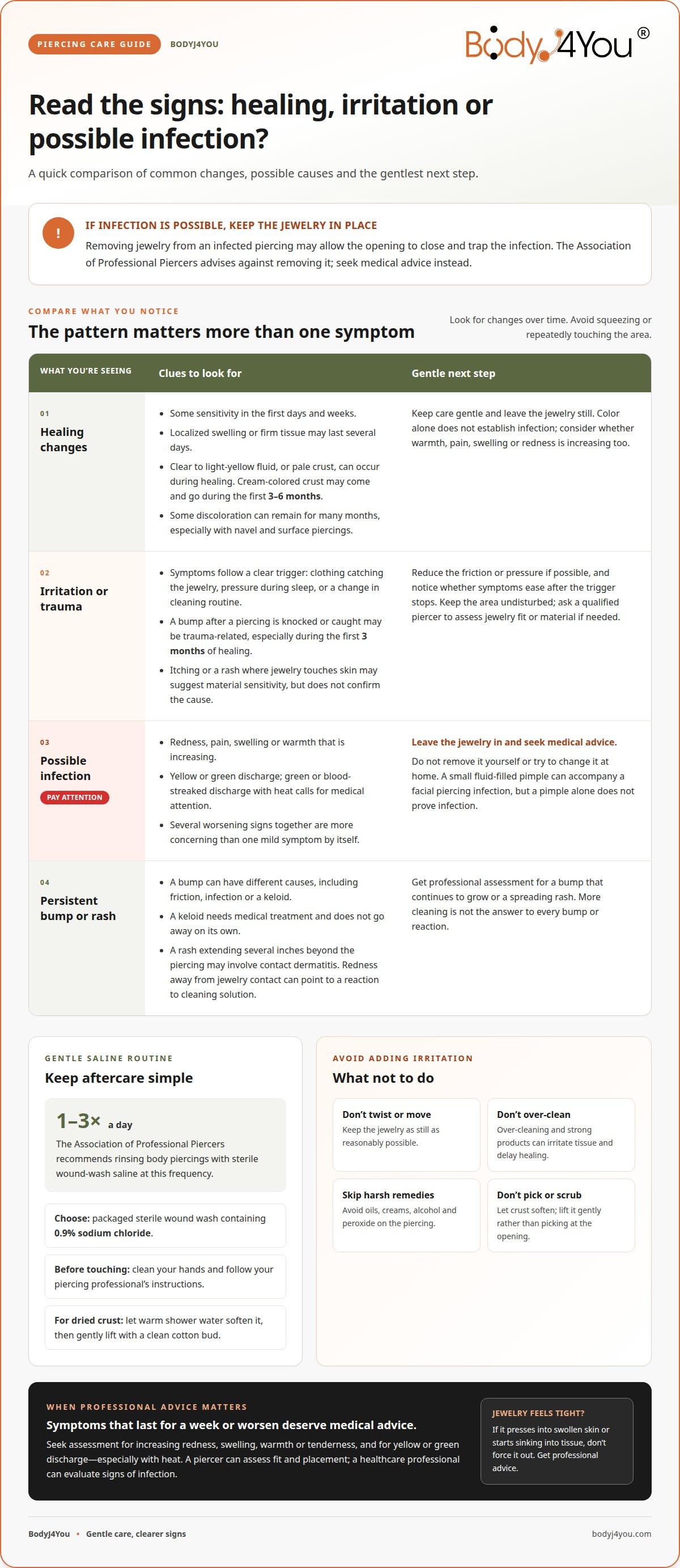
Usually, leave jewelry in an irritated piercing, especially if infection is possible. The Association of Professional Piercers advises against removing jewelry from an infected piercing because removal may lead to an abscess. The piercing opening can also close over an infected wound, potentially trapping fluid and causing further problems. If you suspect infection, don’t remove the jewelry yourself. Seek medical advice and follow the clinician’s guidance.
Don’t remove jewelry from a healing piercing just to clean it. Keep it as still as reasonably possible, and avoid twisting, moving, or repeatedly touching it. If swelling makes the jewelry feel tight, press into the skin, or causes an end to sink into the tissue, don’t force it out. A piercer can assess the fit and placement, while a healthcare professional can evaluate signs of infection.
Material reactions are another possibility. They may appear almost immediately after piercing or within the first few days. Itching or a rash where jewelry touches skin can suggest sensitivity, though it doesn’t confirm the cause. Even 18k gold is 25% other metals, so a gold label alone doesn’t rule out a reaction. Poor-quality or unfamiliar jewelry may also irritate sensitive skin. Avoid changing it yourself while the piercing is healing; ask a qualified piercer to assess whether the material or fit could be contributing.
Check the visible fit without pulling or moving the jewelry. Look for an end pressing into swollen skin, a tight-feeling backing, or jewelry that catches and tugs during ordinary movement. These details can help a piercer assess whether the jewelry’s length, backing, or placement is adding pressure. Don’t try to address a suspected infection by changing jewelry at home. Keep the area undisturbed and seek appropriate advice before making any change.
2. Does It Look More Like Irritation or a Possible Infection?
A fresh piercing can feel sensitive during the first days and weeks of healing. Localized swelling or firm tissue around a new piercing often lasts several days. Some discoloration can remain for many months, especially with navel and surface piercings. Irritation may follow a clear trigger, such as jewelry caught on clothing, pressure during sleep, or a change in your cleaning routine. Notice whether symptoms ease after the trigger stops.
Discharge also changes during normal healing. Clear to light yellow fluid can contain lymph fluid and dead cells, and white or pale yellow liquid may appear without infection. Cream-colored crust can form off and on during the first 3-6 months of healing. Color alone doesn’t settle the question; consider whether discharge appears with increasing heat, pain, swelling, or redness around the piercing.
Possible signs of infection include tissue that becomes red, painful, swollen, and warm to the touch. Yellow or green discharge is another warning sign. Green or blood-streaked discharge with heat calls for medical attention. A small fluid-filled pimple can accompany a facial piercing infection, but a pimple alone doesn’t prove infection. Consider the combination of changes, including whether discomfort and swelling are increasing rather than settling.
Check the area in good light and note changes without squeezing or repeatedly touching it. For example, consider whether warmth, redness, swelling, or discharge has appeared alongside pain since your last check. One mild symptom can overlap with normal healing, while several worsening signs deserve prompt attention. If you suspect infection, seek medical advice, particularly when heat and discolored discharge occur together. This can help distinguish a healing response from a problem that needs treatment.
3. Irritation Bump, Infection or Keloid?
A small bump can follow friction, infection, or a keloid, and these need different responses. A bump after the piercing gets knocked or caught may be trauma-related, especially during the first 3 months of healing. Reducing the activity that keeps catching or pressing on it may allow that bump to settle. A keloid is different: it needs medical treatment and doesn’t go away on its own.
For an irritated ear, nose, or body piercing, keep cleaning gentle and use sterile saline. The Association of Professional Piercers recommends rinsing body piercings with sterile wound-wash saline 1-3 times a day. Choose packaged sterile wound wash containing 0.9% sodium chloride, and follow the instructions from your piercing professional. Clean hands matter before touching the area. Avoid twisting or moving the jewelry during cleaning.
Skip harsh or extra products. The Association of Professional Piercers warns that over-cleaning and strong products can irritate tissue and delay healing. Avoid applying other remedies to the piercing; use sterile saline rather than oils, creams, alcohol, or peroxide. If a rash extends several inches beyond the piercing, contact dermatitis from jewelry or a cleaning product may be involved. Red skin that doesn’t touch the jewelry can also point to a reaction to the cleaning solution.
Let warm shower water soften dried crust before gently lifting it with a clean cotton bud. Don’t pick at crust or scrub the opening. If your skin reacts after you start using a cleaning product, stop using it and return to simple saline care. A bump that continues to grow or a spreading rash needs professional assessment, not more cleaning. These steps keep aftercare measured and help avoid further irritation.
4. When to consult a piercer or healthcare professional
Knowing how to soothe an irritated piercing includes recognizing when symptoms need medical care. The Association of Professional Piercers advises seeing a doctor if symptoms last for a week or worsen. Pay attention to redness, swelling, warmth, or tenderness that keeps increasing. Yellow or green discharge, especially with heat, also calls for medical assessment. Leave jewelry in place unless a healthcare professional advises otherwise, and don’t try to remove or treat a suspected infection yourself.
Get prompt help if swelling makes jewelry sink into the skin or cover an end. This most often happens within the first one to two weeks after piercing, though it can occur later. A doctor can assess infection and tissue changes; a piercer can assess jewelry fit and placement. If jewelry is embedding, don’t push, pull, or twist it. These actions can injure swollen tissue and make assessment harder.
Some placement changes also need a piercer’s attention. If the tissue between a piercing’s openings appears to be thinning, consult a piercer for advice. A piercer can assess whether thinning or shifting is occurring and explain the risks of keeping the piercing. Don’t make that decision by repeatedly moving jewelry or measuring irritated tissue yourself.
Learning how to soothe an irritated piercing means keeping routine care gentle, but cleaning shouldn’t delay a doctor visit when symptoms worsen or persist. If irritation seems linked to pressure or friction, reduce that trigger and observe the area without handling it repeatedly. Practical steps for how to soothe an irritated piercing should never replace medical care when redness spreads, pain rises, or yellow discharge appears. For practical support with routine piercing care, explore piercing aftercare essentials; products aren’t a substitute for a doctor’s assessment of possible infection.
BodyJ4You
BodyJ4You offers practical options for gentle piercing aftercare and jewelry needs. For routine cleaning, Saline Piercing Aftercare Spray and Piercing Cleaning Swabs support a simple care routine; Piercing Bump Treatment Oil is another option for piercing bumps. These products don’t replace medical care when infection is suspected, or professional advice about a painful, swollen, or poorly fitting piercing.
If you’re choosing jewelry for a healed piercing, Captive Bead Rings offer another jewelry option. For ear stretching, BodyJ4You also offers an Acrylic Ear Stretching Kit and a Surgical Steel Taper and Plug Kit. Keep the distinction clear: aftercare products are for routine care, while worsening symptoms call for a healthcare professional. Contact BodyJ4You if you’d like help finding a suitable product for your piercing-care needs.
Make Your Next Piercing-Care Choice With Confidence
Give your piercing time to settle before changing jewelry or adding new products to your routine. A brief note about what seems to trigger discomfort can help you make thoughtful choices and explain the situation clearly to a healthcare professional or piercer. Keep self-care simple, and let persistent or worsening symptoms guide your next step.
Knowing how to soothe an irritated piercing also means knowing when home care is not enough. If you’re unsure whether a product suits your routine, focus on gentle aftercare rather than layering on remedies. For suspected infection or worsening symptoms, medical advice remains the priority; retail aftercare products cannot diagnose or treat an infection.
For questions about piercing-care products or jewelry options, contact BodyJ4You. Take the next step at a pace that respects both your comfort and your personal style.
Frequently Asked Questions
Can I just take the jewelry out if the piercing is irritated?
Don’t remove jewelry simply to make a healing piercing easier to clean. If irritation began soon after a jewelry change or piercing, a material reaction may be involved, but changing the jewelry yourself can add friction and cause injury. Keep the area undisturbed and have a piercer assess the jewelry and fit. If infection seems possible, seek medical advice before changing or removing anything.
Does It Look More Like Irritation or a Possible Infection?
Consider the pattern and how it changes, not just one symptom. A piercing caught by clothing may become sore after that specific contact, while worsening pain alongside warmth, swelling, or colored discharge needs attention. Take a clear photo every three days or so, using similar lighting and distance. Comparing images can help you notice whether redness or swelling is spreading rather than improving.
Irritation Bump, Infection or Keloid?
A bump that follows a knock or snag may be linked to trauma and may settle when that cause stops. A keloid needs assessment by a medical professional and won’t disappear on its own. Infection is more concerning when the area becomes increasingly warm, painful, or swollen. Don’t squeeze a bump to identify it; pressure can further irritate the tissue and obscure changes.
Should I remove an infected piercing?
No. The Association of Professional Piercers advises against removing jewelry from an infected piercing because removal may lead to an abscess. Contact a doctor about a suspected infection, and leave the jewelry in place unless a healthcare professional tells you otherwise. Don’t try to force out jewelry that feels stuck or presses into swollen skin; get medical help.
So What Do I Do About It?
Keep care simple, reduce friction, and avoid adding new products while the piercing is irritated. If symptoms worsen or continue for a week, the Association of Professional Piercers advises seeing a doctor. Increasing redness, pain, warmth, or swelling also deserves medical attention. If jewelry feels tight or its position seems to be changing, have a piercer assess the fit without repeatedly moving it yourself.


