


Acrylic’s smooth appearance doesn’t make it the safest choice for stretching. If you’re asking whether acrylic tapers are safe for stretching, the short answer is that they carry greater hygiene risks than sterilizable materials: acrylic is porous, can trap debris, and can’t be sterilized. Use tapers to guide a larger plug into place, not as jewelry to wear in your ear.
It’s understandable to want a clear answer before stretching. The wrong material or a rushed size change can irritate delicate tissue. A careful approach means choosing smooth, clean tools, using lubrication, and giving your ears time to heal before moving up.
Here, you’ll learn about acrylic’s hygiene risks, how to clean and lubricate stretching jewelry, and why size changes and healing time matter. You’ll also see why a surgical steel taper may be a more suitable option, helping you make a considered choice that supports comfort and self-expression.
Key Takeaways
- Acrylic’s porous surface can trap bacteria, so material choice matters when selecting a taper for stretching.
- Learn how to clean stretching jewelry and use lubrication to make insertion gentler.
- Gauge jumps and rushing a stretch can put delicate tissue under unnecessary strain; patience is part of safe progress.
- Understand why tapers are for guiding jewelry into place, not for wearing as everyday jewelry.
Acrylic tapers and bacterial risk
Acrylic tapers can look smooth, but the material has important hygiene limits. Acrylic is porous, so bacteria, dirt, and debris can become trapped on its surface. It also can’t be sterilized, which increases the risk of transferring bacteria into a stretched piercing. Scratches can create rough spots that may damage delicate ear skin during insertion.
For stretching jewelry and tapers, stainless steel is a strong material choice because it can be sterilized and has a polished finish. Titanium and glass are also alternatives to acrylic. Professional piercers commonly recommend steel, titanium, or glass tapers instead of acrylic, with smooth surfaces and clean handling helping reduce avoidable irritation.
Acrylic may irritate stretched ears if a taper is scratched or develops rough spots. An allergic reaction is different from irritation caused by friction or pressure, so a reaction alone doesn’t identify its cause. If insertion causes pain or bleeding, stop rather than pushing the taper farther.
Watch for pain, bleeding, and signs of tissue damage during a stretch. Forcing a taper can create microtears, while leaving one in your ear can cause uneven pressure and scarring. Stretching too quickly or forcefully can lead to a blowout. Pause if the taper meets resistance instead of treating discomfort as a normal part of the process.
Use a taper only to guide the next-size plug or tunnel into place. Don’t wear it as jewelry: its length and shape can put uneven pressure on your ear. Larger tapers can pull more heavily on one side, increasing strain. Stone tapers are also unsuitable for stretching because their porous surfaces can carry bacteria.
For hygiene-sensitive stretching, an acrylic taper is less suitable than a sterilizable steel option. The key difference is how each item is used: a taper guides insertion, while a properly sized plug or tunnel stays in the ear. Gentle handling, a smooth surface, and stopping at pain or bleeding help protect stretched tissue.
Cleaning and lubrication
Cleaning and sterilizing are different. Washing can remove visible residue, but it doesn’t make acrylic sterile. Acrylic tapers can’t be sterilized, so cleaning them doesn’t remove this hygiene limitation. Don’t treat a cleaned acrylic taper as equivalent to a sterilizable steel taper.
Before handling jewelry, wash and dry your hands. Inspect the taper and plug for residue, scratches, or rough spots. Follow the cleaning directions for the jewelry material, and don’t use a damaged taper. A scratched surface can catch or irritate delicate tissue during insertion.
Keep the taper, plug, and lubricant clean during the process. Apply a small amount of suitable natural oil to the jewelry and stretched opening before guiding in a new plug. Oil helps the plug slide, but it doesn’t sterilize a tool or make a painful stretch safe. Stop if insertion meets resistance.
Use lubrication to ease insertion, not to push through discomfort. A warm shower may make ears easier to stretch before inserting a new plug, but warmth doesn’t replace patience or healing time. If your ear feels sore or the jewelry won’t move gently, pause rather than applying more pressure.
For routine care, piercing cleaning swabs can help clean around jewelry. They don’t change acrylic’s sterilization limits. Keep cleaning tools separate from the taper, and avoid transferring residue from one item to another.
After insertion, clean the area gently and keep the jewelry clean as it heals. Don’t leave a taper in your ear as a substitute for a plug. Tapers are insertion tools, and wearing one can create uneven pressure. Choose smooth, clean jewelry, use natural oil to ease insertion, and stop if your ear feels uncomfortable.
Gauge range for taper stretching
Tapers are used to stretch ear piercings between 14 gauge and 0 gauge. That range describes a progression, not a reason to move quickly through sizes. Each step asks the earlobe to adjust, so choose the next size only when the current stretch is comfortable and healed.
Pay attention to the actual size change between one taper and the next. Acrylic or steel tapers often have jumps of 2mm, which can be too fast for earlobes to adjust to. A larger jump means more tissue must expand at once. Check the stated size of each piece and avoid treating the next number in a set as automatically suitable.
Gauge labels can be confusing because the number alone doesn’t tell you the change in diameter. Compare the current jewelry’s size with the next piece’s stated measurement before attempting insertion. For example, if a taper set moves from one size to another by 2mm, don’t force that transition just because both sizes are included in the same set.
Use a taper to guide a matching plug or tunnel into your ear, rather than leaving it in place. Its purpose is to help the next-size jewelry pass through the piercing. It isn’t a substitute for jewelry designed to sit comfortably in a stretched opening.
During any size change, let comfort guide your decision. A taper should move gently; resistance or pain means the tissue isn’t accepting that step. Stop instead of pushing, and return to your current comfortable size. A slower progression helps avoid unnecessary strain on the earlobe and gives you time to assess each transition.
Between 14 gauge and 0 gauge, focus on the size difference, not simply the destination. A set may offer convenient steps, but the fit of each transition matters more than completing the sequence. Choose a gradual change, use a correctly matched plug, and let your ear set the pace.
Healing time between stretches
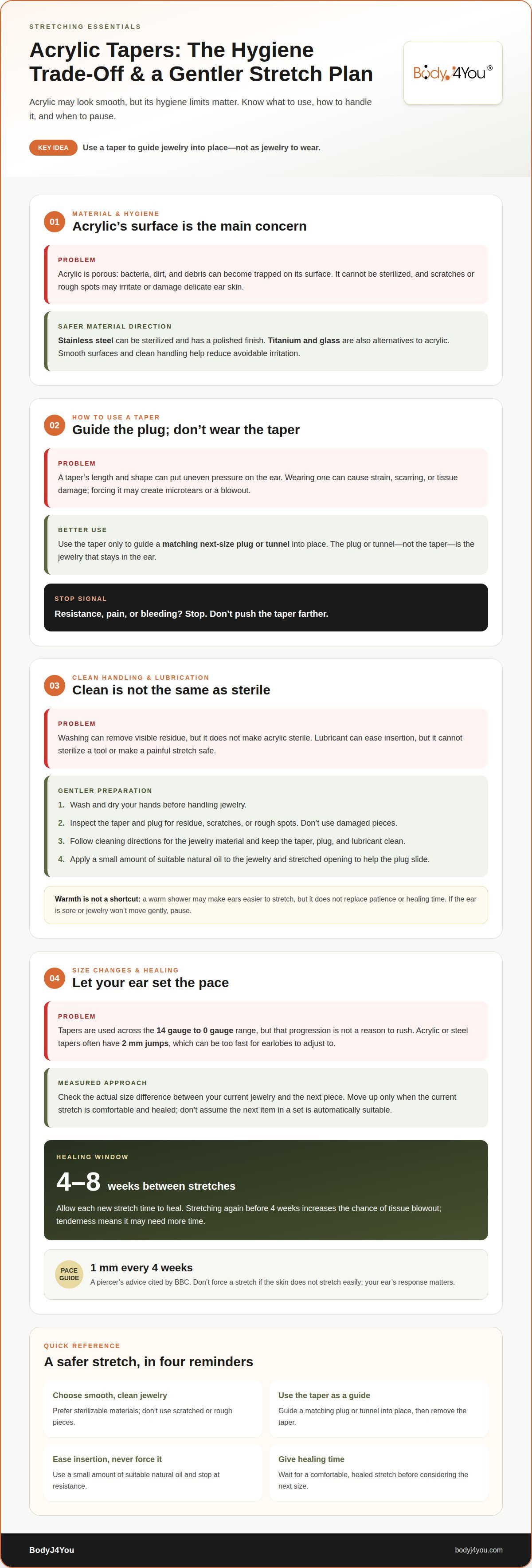
Give each new stretch time to settle before changing sizes again. After stretching, allow the ear to heal for 4 to 8 weeks. Stretching again before 4 weeks increases the chance of tissue blowout, so don’t treat a calendar date as permission if your ear still feels tender.
A piercer advises increasing the stretch by 1 mm every four weeks and not forcing it if the skin does not stretch easily, according to BBC. This gives you a measured pace to follow, but your ear’s response matters too. A taper or plug should move into place without force.
How should you safely stretch earlobes gradually? Move up by a small amount, wait between stretches, and continue only when the current size feels settled. If the next size meets substantial resistance, causes pain, or brings bleeding, return to your current size and let the ear heal for a couple more weeks.
Resistance is useful information, not a challenge to overcome. Pushing a larger taper through tight tissue can cause tears and increase the risk of a blowout. Pain or bleeding also means your ear isn’t ready for that change. Stop, return to the size that fits comfortably, and give the tissue more time to recover.
Use the healing interval to notice changes rather than repeatedly testing the next size. For example, tenderness around your current jewelry is a reason to wait, not to try a larger one. When you attempt another stretch, use lubrication and guide the jewelry gently. Stop immediately if insertion becomes painful or difficult.
Progress may take longer than a set of tapers suggests. A gradual plan respects both the 1 mm increase and the four-week interval, while the 4 to 8 week healing window provides room for recovery. Choose ear-stretching supplies with a measured approach, and let comfort, not urgency, guide each next step.
BodyJ4You: Acrylic Ear Stretching Kit
BodyJ4You’s Acrylic Ear Stretching Kit gives you an option for exploring ear stretching, but remember that acrylic tapers can’t be sterilized. If material hygiene is your priority, the Surgical Steel Taper and Plug Kit offers a steel alternative. Use any taper only to guide suitable jewelry into place, not as jewelry to wear in the ear.
Choose your approach based on the material considerations covered above. Move gradually, allow healing time between size changes, and stop if insertion causes pain or resistance. A kit doesn’t replace careful technique or mean your ears are ready to stretch.
For questions about BodyJ4You’s ear-stretching options, contact BodyJ4You.
Choose a stretching routine that fits your priorities
Whether acrylic tapers are safe for stretching is only one part of choosing your next step. Consider the material you prefer, the jewelry you’ll wear after insertion, and the care products you want on hand. A considered routine helps make each choice intentional rather than driven by the next size in a kit.
BodyJ4You offers a Saline Piercing Aftercare Spray as part of its piercing-care selection. Pairing an aftercare product with a gradual stretching plan can help you prepare for routine care without rushing a size change. Choose what suits your approach, and pause stretching if your ear becomes painful or shows signs of irritation.
For help deciding which BodyJ4You option fits your needs, contact BodyJ4You with your questions. Take your time, make each choice with care, and let self-expression develop at a pace that feels right for you.
Frequently Asked Questions
What Is a Taper?
A taper helps guide jewelry into a stretched piercing. Stretching tapers are straight and a few inches long, with a gradually widening shape that leads toward the next size. For example, you can use one to guide a matching plug through your earlobe. It’s an insertion aid, not a piece intended to stay in your ear.
Are acrylic tapers safe for stretching ears?
Acrylic tapers aren’t the safest choice for stretching because acrylic is porous and can’t be sterilized. The surface may also scratch, creating rough spots that can irritate ear tissue. If hygiene is a priority, consider a sterilizable stainless steel taper. Whichever material you use, don’t force insertion or wear a taper as jewelry after stretching.
What are the risks of using tapers to stretch earlobes?
Using a taper too forcefully can cause pain, bleeding, or tissue tears. A scratched surface may irritate the piercing, while leaving a taper in place can create uneven pressure. Larger tapers can also pull more heavily on one side of the earlobe. Stop if a taper catches or meets resistance instead of pushing it through.
How long should you wait between ear stretching sizes?
Allow 4 to 8 weeks for healing after a stretch, and don’t stretch again before 4 weeks, which increases blowout risk. If the next size causes substantial resistance, pain, or bleeding, return to the current size and allow a couple more weeks for healing. For example, a date on your calendar doesn’t mean your ear is ready if it still hurts.
Are tapers meant to be worn as jewelry after stretching?
No. A taper is for guiding the next-size plug or tunnel into the piercing, not for everyday wear. Its shape can put uneven pressure on the earlobe, especially if you leave it in for an extended period. Once the plug is inserted, wear jewelry designed to sit in the stretched piercing rather than keeping the taper in place.
Are acrylic tapers safe for healed stretched earlobes?
A healed piercing doesn’t change acrylic’s material limitations: it remains porous and can’t be sterilized. That makes acrylic tapers a poor choice for insertion, even after healing. Also distinguish tapers from plugs: a taper guides jewelry into place, while a plug is worn in the opening. Choose jewelry suited to the piercing and don’t wear a taper as a substitute.


