

Can a single piece of surgical steel jewelry really bridge the gap between a high-end aesthetic and chronic pain relief? Since interest in this placement surged in 2020, you've likely seen the viral testimonials and felt captivated by the daith piercing, yet cautious about the intensity of the procedure. It's natural to feel a mix of excitement for the look and anxiety over the potential for stubborn piercing bumps or cartilage irritation. You want the beauty of a captive bead ring without the clinical headache of a failed healing process.
We're here to provide the clarity you deserve by separating biological facts from digital myths. You'll master the essentials of anatomical placement, learn the truth behind Vagus nerve stimulation, and discover how to level up your aftercare using expert-approved saline solutions. This guide provides a structured roadmap for your 2026 piercing journey, covering everything from initial jewelry selection to the precise application of treatment oils. By the end, you'll have the confidence to ensure your new modification is healthy, safe, and rooted in care.
Key Takeaways
- Understand the precise anatomy of the helix crus to determine if your unique ear shape is a candidate for a "true" placement.
- Explore the clinical connection between the Vagus nerve and pressure points to separate scientific potential from common placebo effects.
- Prepare for the unique "crunch" sensation and commit to a disciplined 6 to 9-month healing timeline for optimal cartilage recovery.
- Learn why a captive bead ring is the gold standard for your initial daith piercing and when it's safe to level up to a stylish clicker.
- Master the "Saline Standard" to effectively manage irritation bumps and ensure your journey toward self-expression remains rooted in care.
What is a Daith Piercing? Anatomy and Placement
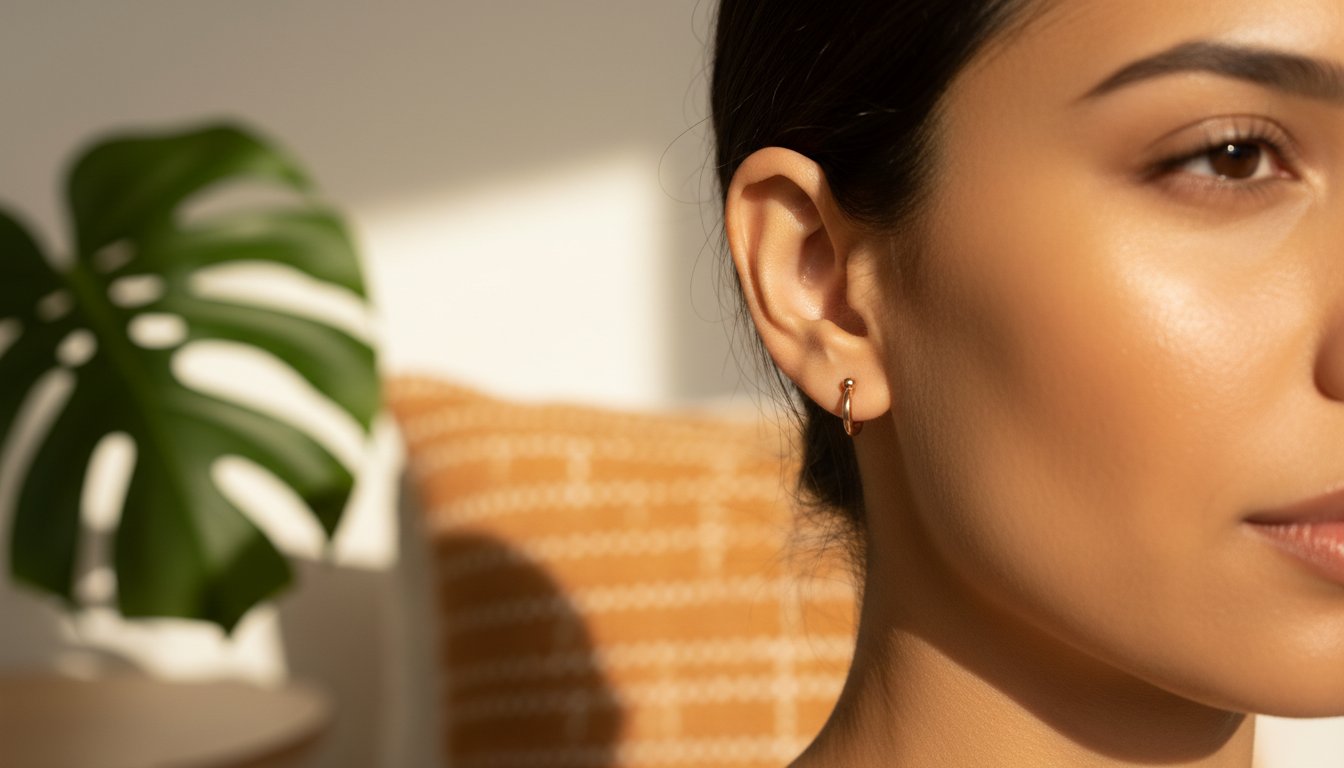
A daith piercing is a sophisticated blend of anatomical precision and dedicated wellness. Unlike standard rim piercings, this modification sits at the crus of the helix. This is the innermost ridge of cartilage located directly above the ear canal. The Daith piercing offers a unique "hidden" aesthetic, where the jewelry appears to grow organically from the ear's internal structure. It's subtle, elegant, and empowering. It avoids the loud profile of outer ear piercings, opting instead for a look that feels both safe and aspirational.
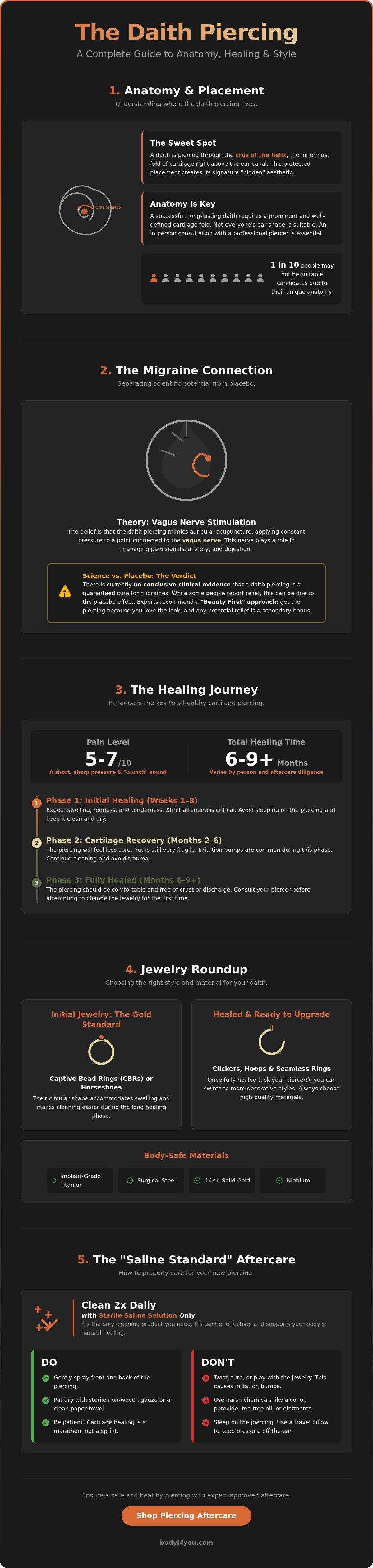
Achieving a "true" daith depends entirely on your unique ear shape. Since every ear is biologically distinct, a physical assessment is the first step in your journey. A successful placement requires a prominent cartilage fold to ensure the jewelry remains stable over time. Without enough depth, the piercing may migrate or fail to heal properly. It's a procedure that demands clinical precision and an eye for symmetry. Data from professional piercing studios in 2023 indicates that roughly 10% of clients may lack the specific fold depth necessary to support this style safely.
The Crus of the Helix Explained
The helix crus is the specific point where the ear's outer rim transitions into the internal anatomy. Because this area is tucked away, it provides a protective cradle for jewelry like captive bead rings. Stability is the priority here. A deep placement ensures the jewelry doesn't snag on hair or clothing, which is a common cause of irritation. To check your anatomy at home, look for a defined, shelf-like ridge of cartilage above your ear canal. If the area is flat or lacks a distinct fold, your piercer might suggest an alternative like a rook or faux-rook to achieve a similar aesthetic. Most experts prefer using a 16-gauge needle for this area to provide a balance of durability and comfort during the 9-month healing journey.
Finding a Specialist Piercer
This is an advanced technique that requires a specialist's touch. It's not a procedure for beginners. When vetting a professional, ask about their specific experience with inner-ear cartilage. A knowledgeable piercer will explain why they use a curved needle to navigate the tight space of the ear canal. This method minimizes trauma to the tissue and promotes a smoother healing process. Watch for red flags during the marking process; the dots should be perfectly aligned within the fold. If the piercer seems hesitant or fails to use sterile, single-use tools, it's time to find a new studio. Your safety is paramount, and a true expert will prioritize the long-term health of your skin over a quick sale. Level up your expectations and choose someone who has seen it all over their career.
The Daith Piercing and Migraines: Science vs. Placebo
The conversation surrounding the daith piercing often shifts from aesthetics to anatomy. For many, this modification represents more than a style choice; it's a hopeful solution for chronic migraine relief. This belief stems from the idea that the piercing mimics auricular acupuncture by targeting a specific pressure point. In a 2017 case study published by the National Institutes of Health, researchers explored Daith Piercing and Vagal Modulation as a potential mechanism for pain reduction. While the results were intriguing, the 2026 medical consensus remains clear: a piercing should never be viewed as a guaranteed medical cure. It's a sophisticated addition to your look that may offer secondary wellness benefits through the power of intention and self-expression.
Modern neurologists and professional piercers emphasize a "beauty first" approach. If you decide to move forward, do it because you love the way the jewelry complements your ear's natural curves. Relying on a piercing for clinical treatment can lead to disappointment if the "honeymoon phase" of relief fades. Instead, view the procedure as an empowering act of body autonomy. By choosing a high-quality captive bead ring, you're investing in a look that is healthy, safe, and effective for your personal style. To maintain the integrity of your skin during this process, using a saline piercing aftercare spray is the best way to support your body's natural healing rhythm.
The Vagus Nerve Link
The theory relies on the vagus nerve, which is the longest cranial nerve in the body and a key regulator of the parasympathetic nervous system. Proponents suggest that the constant pressure of jewelry on the helix crus provides ongoing stimulation to this nerve. The vagus nerve helps manage the body's "rest and digest" functions and pain signals; however, there is currently no clinical evidence that a permanent piercing can provide the consistent, regulated electrical pulses required for medical-grade vagus nerve stimulation. Precise placement is essential for this theory to even be considered, which is why a specialist's expertise is non-negotiable.
User Testimonials vs. Clinical Data
Why do so many individuals report significant improvement in their symptoms? Psychologists often point to the "placebo effect," where the brain's expectation of relief triggers actual neurochemical changes. This 30% to 40% improvement rate in subjective pain is common in many wellness interventions. Furthermore, the psychological boost of taking control of one's appearance cannot be understated. Whether you're researching a daith or a septum piercing, the journey toward self-expression provides a sense of agency that often improves overall well-being. This sense of empowerment is a core pillar of body modification, helping you level up your confidence while navigating your health journey.
Pain Levels and the 9-Month Healing Journey
Preparation is the best antidote to anxiety. A daith piercing involves passing a needle through a dense, curved section of the ear's internal cartilage. While pain is subjective, most clients rate the sensation at a 5 or 6 out of 10. You'll likely feel a sharp pressure followed by a distinct "crunch" sound. This sound is simply the needle moving through the thick cartilage fold; it's a normal part of the process that signifies a successful pass. Once the needle is through, the sharp sensation usually transitions into a dull, warm throb that lasts for several hours. This initial discomfort is manageable and marks the beginning of your body's natural recovery process.
Patience is your greatest asset during the recovery phase. Cartilage has a limited blood supply compared to earlobes, which extends the daith piercing healing timeline to a standard 6 to 9 months. During this period, the tissue is physically vulnerable and sensitive to external pressure. Sleeping on your side is the primary cause of healing delays and irritation. To protect your investment, adopt the "L" shape rule: use a travel pillow or a specialized donut pillow to ensure your ear sits in the center hole. This prevents the jewelry from pressing against the skull, which can cause the piercing to migrate or develop stubborn bumps.
What to Expect During the Procedure
Your specialist will create a sterile environment, using medical-grade tools to ensure the procedure is healthy, safe, and effective. The piercer will first clean the helix crus with a surgical-grade antiseptic. They'll then mark the entry and exit points with clinical precision. A curved needle is typically used to navigate the tight anatomy of the inner ear. The entire needle pass takes less than three seconds. Immediately after, your piercer will insert a high-quality captive bead ring to allow for initial swelling. You might feel a sense of immediate after-pressure, but this usually subsides within 20 minutes.
The Three Stages of Cartilage Healing
- Stage 1: The Inflammatory Phase (Weeks 1-2): Expect minor swelling, redness, and a clear discharge. This is your body's immune system rushing to the site. Use a saline piercing aftercare spray twice daily to keep the area clean without causing irritation.
- Stage 2: The Proliferative Phase (Months 1-4): Your body begins building new tissue. You'll notice "crusties" forming around the jewelry. Resist the urge to pick them; instead, let the saline soak soften them until they rinse away naturally. If you notice minor irritation, applying a piercing bump treatment oil can help soothe the skin.
- Stage 3: Maturation (Months 6+): The piercing canal fully stabilizes and strengthens. The tissue becomes less reactive, and the "hidden" aesthetic of the jewelry feels like a permanent part of your self-expression.
Avoid wearing earbuds or over-ear headphones for at least the first 8 to 12 weeks. Any physical contact with the healing site can introduce bacteria or cause mechanical trauma to the fresh tissue. Wait until the proliferative phase is well-established before testing the fit of your favorite tech accessories. Level up your patience now to ensure a lifetime of healthy, beautiful wear.
Daith Jewelry Roundup: Materials and Styles
Choosing the right jewelry for your daith piercing is a pivotal step in your journey toward self-expression. It requires a balance between clinical safety and personal aesthetics. Your initial jewelry isn't just a fashion statement; it's a functional tool that supports the internal structure of the helix crus during recovery. By selecting materials that are healthy, safe, and effective, you ensure that your piercing remains a vibrant part of your look for years to come. In 2026, the industry standard focuses on high-polish finishes that minimize bacterial adhesion and promote a smooth healing canal.
Initial Jewelry vs. Healed Jewelry
Your piercer will likely start you with a captive bead ring (CBR) or a circular barbell with a larger diameter. This extra space is essential to accommodate the inflammatory phase described in previous sections. A larger ring prevents the jewelry from putting undue pressure on the entrance and exit points, which is a primary cause of piercing bumps. You must resist the urge to swap your jewelry too early. Changing your hoop before the 6-month mark can disrupt the fragile new skin cells of the proliferative phase, leading to setbacks in your 9-month journey. Unlike the rigid material requirements and straight-bar structure of industrial barbells, daith jewelry must navigate a tight, curved space, making the initial diameter choice critical for long-term stability.
Choosing the Right Metal for Your Skin
Material safety is non-negotiable for cartilage piercings. ASTM F-136 Titanium is the gold standard for fresh piercings because it's 100% nickel-free and hypoallergenic. It's the same material used in medical implants, ensuring your body won't react to the metal as a foreign invader. Surgical steel is another reliable, high-shine option that remains affordable and durable. However, ensure it meets the ISO 5832-1 standard to guarantee its purity. Once you reach the maturation stage after 9 months, you can level up to 14k or 18k solid gold. Avoid gold-plated or "gold-toned" mystery metals, as these can flake off inside the piercing canal and cause intense irritation. For those ready to begin their journey with the highest quality materials, explore our collection of high-quality captive bead rings designed for both safety and style.
Decorative clickers, hearts, and moons are excellent choices for healed piercings. These styles feature a hinged closure that makes changing your own jewelry much simpler. The "true daith" look often utilizes these ornate shapes to fill the ear's internal space, creating a sophisticated focal point. Whether you prefer the classic simplicity of a CBR or the intricate detail of a decorative clicker, prioritizing the integrity of your skin will always lead to the best aesthetic outcome. Stick to the "Rule of Three" for your jewelry wardrobe: one reliable titanium staple, one surgical steel backup, and one high-end decorative piece for special occasions.
Expert Aftercare: Managing Bumps and Irritation
The final phase of your daith piercing journey is the most critical for long-term success. While the procedure requires anatomical precision, the aftercare requires disciplined patience. In 2026, the clinical "Saline Standard" remains the only expert-approved method for maintaining skin health. You must avoid the outdated DIY advice found on social forums, such as using tea tree oil or aspirin pastes. These harsh substances often cause chemical burns on sensitive cartilage, leading to more trauma than they resolve. Instead, rely on a sophisticated routine that is healthy, safe, and effective. By following the "LITHA" (Leave It The Hell Alone) method, you minimize mechanical irritation and allow your body's natural defenses to work without interference.
Identifying the common "daith bump" is essential for peace of mind. About 60% of new piercings experience some form of localized swelling during the proliferative phase. Most of these are simple irritation bumps caused by sleeping on the ear or accidental snags. These are distinct from infections, which involve spreading redness and heat, or keloids, which are rare genetic scars. If you notice a small, flesh-colored bump, it's usually a sign that the tissue is stressed. Our philosophy is rooted in care; we provide the tools to soothe this irritation while respecting the integrity of your skin.
Daily Cleaning Routine
Your cleaning protocol should be a gentle, non-invasive ritual. Use a saline piercing aftercare spray to flush away debris without touching or rotating the jewelry. Moving the ring can break the fragile new cells forming inside the piercing canal, which resets your healing clock. After spraying, follow the "Low-Moisture" rule. Bacteria thrive in damp environments, so use a hairdryer on the lowest, coolest setting to gently dry the area. This ensures no moisture is trapped in the tight fold of the helix crus. Apply a fine mist of sterile saline to the entry and exit points two to three times daily to maintain a balanced pH and support the skin's natural barrier.
Troubleshooting Common Issues
If a stubborn bump persists despite proper cleaning, you can level up your care routine with a targeted solution. Applying a piercing bump treatment oil once a day can help hydrate the surrounding tissue and reduce redness. These oils use non-comedogenic ingredients like jojoba or rosehip to soothe the skin without clogging the piercing canal. However, you must monitor the site for signs of true infection. If you experience green discharge, a fever, or redness that spreads more than 2 centimeters from the site, consult a medical professional immediately. Most minor issues are resolved by a jewelry downsize. Visit your piercer around the 12-week mark to see if a smaller diameter ring will reduce the weight and movement on the healing tissue. This proactive approach is how you ensure your self-expression remains a source of pride, crafted by experts and trusted by thousands.
Embrace Your Journey Toward Self-Expression
A successful daith piercing is a commitment to both clinical safety and personal empowerment. You now understand that precise anatomical placement at the helix crus and a disciplined 9-month healing timeline are the foundations of a healthy result. While the connection to migraine relief remains a hopeful area of study, the aesthetic value of high-quality surgical steel jewelry is a certainty. By prioritizing the "Saline Standard" and avoiding harmful DIY methods, you protect the integrity of your skin and ensure your new look remains vibrant.
BodyJ4You provides the stabilizing force you need during this transition. We bring 20 years of industry-leading experience to your routine. Our USA-manufactured aftercare solutions are designed to be healthy, safe, and effective. We invite you to Shop BodyJ4You Professional Aftercare and Jewelry to find the expert-crafted tools your body deserves. Our philosophy is Crafted by Experts. Trusted by Thousands. Rooted in Care. You have the knowledge to level up your style with total confidence.
Frequently Asked Questions
How much does a daith piercing hurt on a scale of 1 to 10?
Most individuals rate the pain of a daith piercing at a 5 or 6 out of 10. It's more intense than a standard earlobe but comparable to other thick cartilage placements like the industrial or rook. You'll feel a sharp, localized pressure and likely hear a "crunch" sound as the needle passes through the dense fold. This sensation is brief, typically lasting less than 3 seconds before transitioning into a manageable, warm throb.
Does a daith piercing really help with migraines?
There is currently no clinical evidence confirming that this piercing is a medical cure for migraines. While a 2017 case study explored the potential for vagal modulation, the relief reported by many is often linked to the placebo effect or acupuncture pressure points. You should choose this placement for its sophisticated aesthetic first. Any potential wellness benefits should be viewed as a secondary, hopeful outcome rather than a guaranteed clinical treatment for chronic pain.
Can I wear AirPods or earbuds with a daith piercing?
You should avoid wearing AirPods or earbuds for at least 8 to 12 weeks after your procedure. Physical contact from tech accessories can introduce bacteria or cause mechanical trauma to the healing tissue, which often leads to irritation bumps. Once the initial inflammatory phase passes, you might find that smaller earbuds fit comfortably. However, larger jewelry like captive bead rings may still interfere with the seal of your headphones until the piercing is fully mature.
How long does it take for a daith piercing to fully heal?
A daith piercing typically takes 6 to 9 months to fully stabilize and heal. Cartilage has a limited blood supply compared to other tissues, which makes the recovery process significantly longer than a standard lobe. Your specific timeline depends on your immune health, sleep habits, and aftercare discipline. While the area may feel fine after 12 weeks, the internal canal is still fragile and requires consistent care until the 9-month mark is reached.
Which side should I get my daith piercing on for migraines?
Proponents of the acupuncture theory suggest getting the piercing on the side where your migraine pain is most frequent or intense. If your pain is bilateral, there is no clinical rule for which side you should choose. Most people prioritize the ear that best complements their existing jewelry or the side they don't sleep on to avoid irritation. Since medical efficacy isn't proven, choose the side that best fits your personal aesthetic and lifestyle needs.
How do I get rid of a bump on my daith piercing?
You can manage a piercing bump by identifying the source of irritation and applying a specialized treatment oil. Most bumps are caused by sleeping on the ear or using harsh chemicals like tea tree oil. Use a saline piercing aftercare spray twice daily to keep the area clean and apply BodyJ4You Bump Treatment Oil to soothe the skin. If the bump persists, visit your piercer to see if a jewelry downsize is necessary to reduce movement.
Can I change my daith jewelry myself?
You should wait at least 6 months before attempting to change your jewelry yourself. The daith is located in a tight, awkward space that makes it difficult to navigate without professional tools and a clear line of sight. For your first change, it's safer to have a specialist do it to avoid damaging the fresh canal. Once the piercing is fully mature and stable, you can level up to easy-to-use hinged clickers for simpler home changes.
What is the best jewelry material for a fresh daith piercing?
ASTM F-136 Titanium is the gold standard material for a fresh daith piercing. It's 100% nickel-free and hypoallergenic, which is crucial for preventing irritation in the 10% of the population with metal sensitivities. Surgical steel is another durable and high-shine option that remains a reliable staple in the industry. Ensure your jewelry has a high-polish finish to prevent bacteria from adhering to the surface during the critical first 12 weeks of the healing process.


