


Yellow crust doesn't automatically mean pus. Whether yellow crust on a piercing is pus depends on its texture and the symptoms around it: thin, clear or pale-yellow fluid that dries into crust can be part of healing, while thick, foul-smelling discharge with worsening redness, heat, swelling, or pain may signal infection.
It’s understandable to feel concerned when a new piercing looks crusty, especially because irritation can resemble infection. Over-cleaning or harsh products may irritate the area, and metal sensitivity can also cause a reaction. The clues are in how the discharge looks and whether symptoms are settling or getting worse.
Here, you’ll learn how to distinguish normal healing crust from possible infection, irritation, or metal sensitivity, and what gentle aftercare can help. You’ll also find out when to leave jewelry in place and when symptoms call for medical care.
Key Takeaways
- Assess the discharge alongside changes in pain, redness, warmth, and swelling to judge whether the piercing may be healing or needs attention.
- Resist picking at crust, and learn how gentle cleaning can protect fragile skin while it heals.
- If you suspect infection, understand why removing the jewelry yourself may not be the safest first step.
- Recognize symptoms that call for prompt medical care, including signs that infection may be spreading.
Is it normal for a new piercing to be crusty?
Yes. Pale fluid can dry into crust during the first few weeks after a piercing. Its appearance and accompanying symptoms help distinguish routine healing from possible infection.
Dried Lymph During Healing
Lymph is a clear or pale fluid that can seep from a healing piercing and dry on the skin. Mixed with dead skin cells and a little dried blood, it forms the familiar crust around the opening. This process can leave white, clear, or pale-yellow flakes. Understanding what forms the crust can help you avoid mistaking ordinary dried fluid for pus.
Normal Discharge Versus Pus
Normal healing discharge is generally thin, clear, or pale yellow, then dries into crust. Pus may also look yellow, but it is more concerning when thick, green, or foul-smelling. Color alone cannot settle the question: consider texture, odor, and how the surrounding skin feels. Dry, flaky crust without odor, swelling, or pain is more consistent with routine healing than discharge accompanied by worsening symptoms.
How Long Crusting Can Last
Yellow or clear crust may appear during the first few weeks after a piercing. Healing times vary, so a small amount of pale crust does not, by itself, establish infection. Look at the pattern: whether discharge dries normally or becomes thick and unpleasant-smelling, and whether discomfort increases. Don’t peel or scratch the crust; disturbing fragile new skin can cause bleeding and slow healing.
Other early symptoms can include mild tenderness, soreness, stinging, pinching, or burning. Minor swelling, bruising, and discoloration may also occur, while temporary warmth or itchiness can accompany increased blood flow. Consider these signs together rather than judging them in isolation. To soften crust, hold warm, salty water against the area, then let loosened material clear gently. Avoid pulling off flakes that remain attached.
Whether to leave jewelry in during suspected infection
Keep jewelry in during a suspected infection unless a doctor tells you to remove it. This advice applies to ear cartilage, earlobe, nose, and navel piercings, but the site and symptoms still matter in a medical assessment.
Cleaning and Immediate Care
Gentle cleaning helps remove surface residue without adding avoidable irritation. The Association of Professional Piercers recommends sterile saline wound wash containing 0.9% sodium chloride for piercing aftercare. Clean carefully around the jewelry, and don’t twist or turn it when the piercing is dry. If infection seems possible, avoid squeezing discharge or pulling out the jewelry yourself. These steps reduce unnecessary disturbance while you arrange appropriate medical advice for worsening symptoms.
Recognizing Possible Infection
Possible infection is more concerning when several changes appear together. Look for thick, gooey green or bright-yellow discharge, a bad smell, increasing soreness, swelling, redness, or warmth around the piercing. Extensive redness and skin that feels hot to the touch can also be warning signs. A little crust alone doesn’t establish infection; the combination and progression of symptoms matter. Note whether discomfort is worsening and redness is spreading, rather than judging the piercing by discharge color alone.
Medical Treatment and Antibiotics
Medical treatment depends on the signs of infection and whether it has spread. An infected piercing may need antibiotics as a cream, ointment, or tablets. Antibiotics are often necessary when infection has spread and caused cellulitis, rather than automatically for every irritated or crusty piercing. A doctor can assess the area and determine whether antibiotics or another treatment is appropriate. Seek medical care for worsening symptoms instead of trying to treat a suspected infection by removing jewelry or applying unprescribed products.
For gentle routine cleaning, Saline Piercing Aftercare Spray offers a saline option for piercing aftercare. It doesn’t replace medical assessment when infection signs are present.
When does an ear piercing need medical attention?
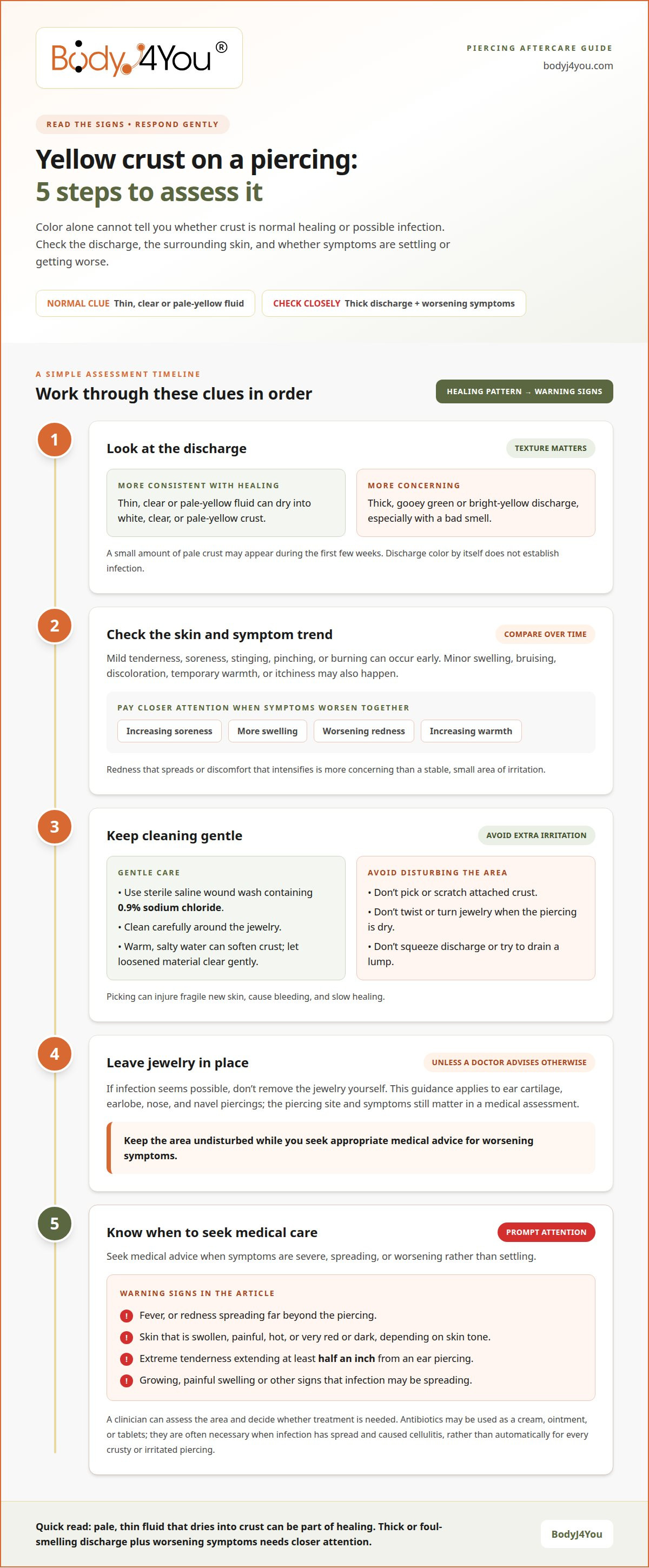
Seek medical advice when symptoms are severe, spreading, or worsening rather than settling. A fever or redness extending far from an ear piercing calls for medical help.
Urgent Reasons to Seek Help
An ear piercing needs prompt medical attention if the surrounding skin becomes swollen, painful, hot, or very red or dark, depending on skin tone. Extreme tenderness extending at least half an inch from the piercing may also indicate infection. These signs are especially concerning when they appear together or intensify. Don’t wait for the discharge to change color before seeking advice if pain or heat is increasing.
Fever or redness spreading far beyond the piercing hole are clear reasons to get medical help. Notice the direction of change: redness that expands rather than staying close to the opening is more concerning. If you feel unwell alongside these symptoms, take the combination seriously and seek care.
Spread of Infection and Abscesses
A spreading infection can affect deeper tissue, and untreated piercing infections can lead to deep tissue damage. An abscess is a localized collection of pus; a suspected infection with growing, painful swelling needs medical assessment. Don’t squeeze a lump or try to drain it yourself, as this can further injure the area.
Watch for changes around the piercing and beyond it. Increasing tenderness, warmth, and spreading redness, for example, are more concerning than a stable, small area of irritation. If symptoms worsen or you develop a fever, seek medical advice promptly. Early assessment helps determine whether the problem is limited to the piercing or affecting surrounding tissue.
While arranging care, keep the jewelry in place unless a doctor tells you otherwise. Avoid twisting it, squeezing the piercing, or removing jewelry to inspect the opening. These actions can disturb already tender tissue. Tell the clinician when symptoms began and how they have changed, including whether redness has spread or fever has appeared. These details help explain the pattern and guide assessment.
Irritation from over-cleaning and harsh products
More cleaning doesn’t always mean better healing. Repeated wiping, rubbing, or moving jewelry can disturb delicate skin and keep a piercing irritated. That irritation may look like redness, tenderness, or fresh clear fluid, making it easy to mistake a healing response for infection. Consider your cleaning routine: discomfort that flares after scrubbing or frequent handling may point to irritation, though worsening symptoms still need attention.
Keep care gentle and consistent. The Association of Professional Piercers recommends sterile saline wound wash containing 0.9% sodium chloride for piercing aftercare. Apply it without scrubbing, and let softened crust clear on its own. Don’t pull flakes off or repeatedly clean just because a small amount remains. Each extra pass can create friction, while attached crust may lift naturally as the skin settles.
Products can also be too harsh for a healing piercing. Avoid layering multiple cleansers or applying products that sting or leave the skin feeling increasingly dry or uncomfortable. New burning after applying a product is a useful clue to stop using it. Keep the routine simple, and avoid twisting jewelry when the piercing is dry.
Metal sensitivity is another possible source of irritation. If redness, itching, or tenderness remains focused around where the jewelry touches the skin, sensitivity may be worth considering alongside cleaning habits. Infection is more concerning when symptoms worsen, with spreading redness, heat, swelling, or thick, unpleasant-smelling discharge. A change in routine won’t treat an infection, so seek medical advice for these signs.
Choose gentle care over repeated intervention: use sterile saline, avoid friction, and leave crust to loosen naturally. If cleaning swabs fit your routine, explore piercing-cleaning options for targeted care around the jewelry. Stop any product that causes new discomfort, and seek medical care if symptoms continue to worsen.
BodyJ4You
BodyJ4You offers piercing jewelry and aftercare products to support informed care choices. If gentle cleansing is part of your routine, its Saline Piercing Aftercare Spray is one available option. For jewelry needs, the range also includes Captive Bead Rings. These products can support routine aftercare, but they don’t diagnose or treat an infection.
Use the signs discussed above to guide your next step: seek medical care for spreading redness, fever, worsening pain, or other concerning symptoms. For routine product questions related to piercing care or jewelry, contact BodyJ4You.
Choose your next step with care
If you’re still wondering whether yellow crust on a piercing is pus, let the full picture guide your next move rather than relying on color alone. Keep care gentle, avoid experimenting with multiple products, and seek medical attention when symptoms concern you. Product choices can support routine aftercare, but they aren’t a substitute for medical assessment.
BodyJ4You offers the Acrylic Ear Stretching Kit, Surgical Steel Taper and Plug Kit, and Saline Piercing Aftercare Spray. These serve different jewelry and care needs, so choose only what fits your situation and current aftercare routine. For persistent or worsening symptoms, prioritize a healthcare professional; for product questions, contact BodyJ4You.
A calm, informed next step can help you care for your piercing with greater confidence.
Frequently Asked Questions
Is it an infection, irritation, or metal sensitivity?
The pattern and timing of symptoms can help distinguish their possible causes. Irritation may follow repeated cleaning, rubbing, or handling; sensitivity may appear where jewelry contacts the skin. Infection is more concerning when redness, heat, swelling, or pain worsens, especially with unpleasant-smelling discharge. These clues aren’t a diagnosis. If symptoms are progressing or you feel unwell, seek medical care rather than changing products repeatedly.
Is sea salt soak still recommended for crusting?
Warm salty water can soften crust, but sterile saline wound wash is a practical aftercare choice. The Association of Professional Piercers recommends sterile saline containing 0.9% sodium chloride. Use a clean pad dampened with warm saline to loosen residue, rather than scrubbing or peeling it away. Don’t twist jewelry during cleaning, and let attached crust loosen gently.
What does normal healing look like?
Healing can involve small, changing symptoms rather than a perfectly clean piercing. For example, the area may feel mildly sore after being bumped, then settle without increasing redness or swelling. A little pale fluid can dry on the skin, and minor bruising or discoloration may occur. Pay attention to the overall direction: steadily worsening discomfort or spreading redness deserves medical attention.
What should you do if you suspect an ear piercing infection?
Leave the jewelry in unless a doctor advises removal, and arrange medical care if symptoms suggest infection. Avoid squeezing the area, twisting the jewelry, or applying unprescribed treatments. Before your appointment, note when the changes began and whether pain, heat, or redness is spreading. Fever or redness extending far from the piercing hole calls for prompt medical help.
Is yellow crust on a new piercing normal healing fluid or pus?
If you’re asking whether yellow crust on a piercing is pus, check more than its color. Thin, pale fluid that dries into a light crust can occur during healing. Thick discharge, a bad smell, or worsening soreness and swelling is more concerning. For example, a dry pale flake without other changes differs from fresh, gooey discharge alongside increasing redness.
What does infected piercing discharge look and smell like?
Discharge from a possible infection may be thick and gooey, green or bright yellow, and unpleasant-smelling. The surrounding skin may also become increasingly red, warm, swollen, or sore. A tiny dry flake differs from discharge that keeps emerging alongside these changes. Don’t squeeze or try to drain the piercing; seek medical assessment when symptoms worsen.


