


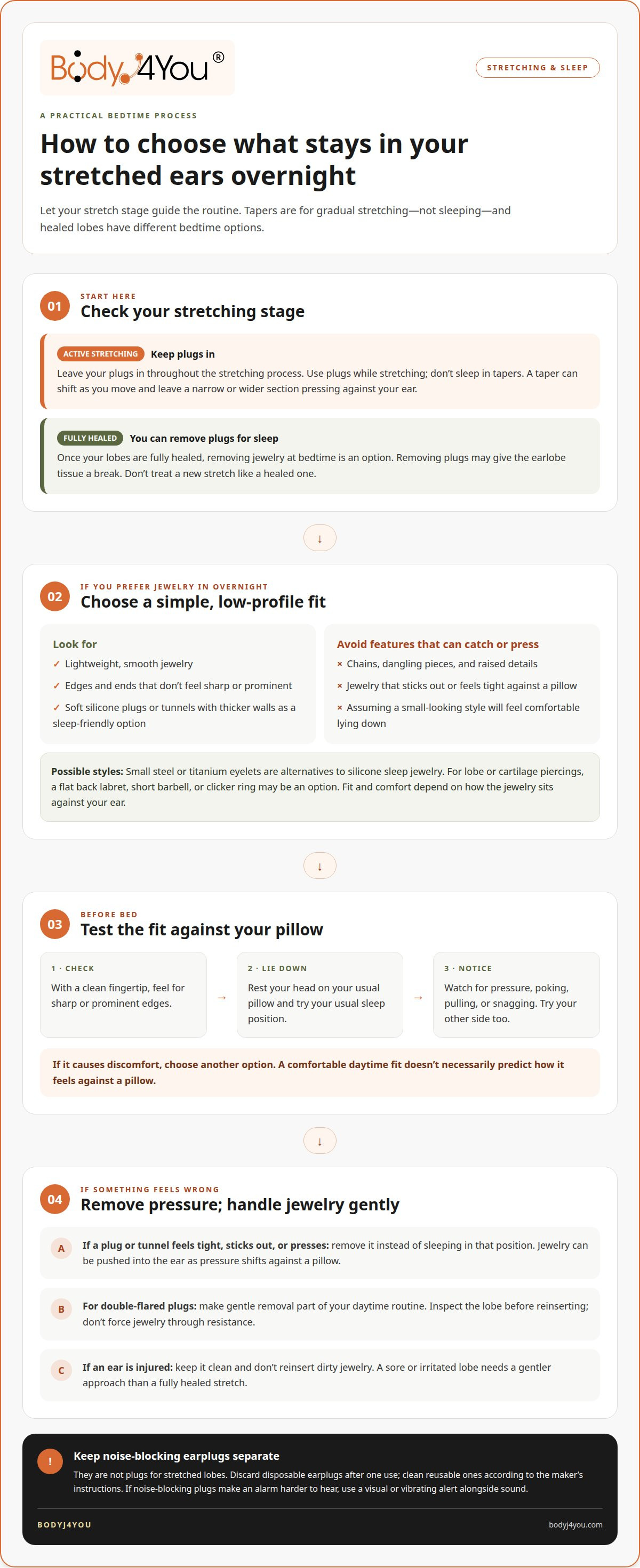
Sleeping with plugs in isn’t always the right choice. Keep plugs in while you’re actively stretching, but once your lobes are fully healed, you can remove them for sleep. Don’t sleep in tapers. Choose plugs during the stretching process, and consider removing jewelry at bedtime after healing.
It’s natural to want to protect a stretch while also keeping your ears comfortable overnight. But jewelry that feels secure during the day can press against your ear, snag on bedding, or be pushed into the ear while you sleep.
This guide explains when to leave plugs in and when to take them out, why tapers aren’t suitable for sleeping, and what to consider if you want a gentler option. You’ll also learn how lightweight jewelry and soft silicone plugs or tunnels may fit into a comfortable nighttime routine, helping you choose what works for your stretch and your rest.
Key Takeaways
- Keep plugs in while actively stretching, but avoid sleeping in tapers; once your lobes are fully healed, consider removing jewelry at bedtime.
- For nighttime wear, look for lightweight, simple jewelry without parts that could poke or snag.
- Know how plugs and tunnels can shift or press into your ears during sleep, and make removing double-flared plugs part of your daily routine.
- If you prefer a sleep-friendly option for stretched ears, consider soft silicone plugs or tunnels with thicker walls.
Avoiding sleep with tapers
- Keep tapers out of your sleep routine. They guide gradual stretching; they aren’t designed for comfortable overnight wear. A taper can shift as you move, leaving a narrow or wider section pressing against your ear. Choose plugs while actively stretching, and keep them in throughout that process.
- Let your stretching stage guide your bedtime choice. While your lobes are stretching, leave your plugs in at all times. Once your ears are fully healed, you can remove plugs for sleep. Don’t treat a new stretch like a healed one: the tissue’s condition determines which routine is appropriate.
- Keep ear-stretching jewelry separate from noise-blocking earplugs. If outside sounds interrupt your sleep, try a fan, a white-noise machine, or quiet background audio instead. These options don’t require putting a taper or stretching plug into your ear canal. Keep noise-blocking devices separate from jewelry worn in stretched lobes.
- Handle disposable and reusable noise-blocking earplugs differently. Discard disposable earplugs after one use. For reusable earplugs, follow the maker’s cleaning instructions before wearing them again. Don’t put dirty noise-blocking earplugs into your ear, and don’t confuse them with plugs designed for stretched lobes.
- Check your ears before putting jewelry back in. If an ear is injured, keep it clean and don’t reinsert dirty jewelry. A sore or irritated lobe needs a gentler approach than a fully healed stretch. Removing plugs for sleep can suit healed lobes; during active stretching, keep plugs in instead.
Treat bedtime as a point to choose the right kind of jewelry, rather than extending a taper’s use into the night. The guidance is straightforward: avoid sleeping with tapers, and switch to plugs for sleep. Keep that choice consistent with the role of each item; a taper belongs to the stretching process, while plugs are the option for sleeping. If you are deciding what to wear before settling down, set the taper aside and use plugs instead. This keeps the sleep routine aligned with the recommendation, without making a taper part of overnight wear.
Lightweight jewelry options for sleep
- First, decide whether jewelry needs to stay in overnight. For fully healed lobes, removing plugs avoids pressure from jewelry. If you prefer sleeping with plugs in, choose a low-profile, lightweight style. Small steel or titanium eyelets are alternatives to silicone sleep jewelry. Check their edges and avoid shapes that can catch on bedding.
- Choose a simple design rather than a decorative one. Chains, dangling pieces, and raised details can snag or press against your ear. Smooth surfaces leave fewer places for hair or fabric to catch. Before sleeping with plugs in, check the jewelry with a clean fingertip. If an edge feels sharp or prominent, choose another option.
- For lobe or cartilage piercings, consider a flat back labret, short barbell, or clicker ring. These styles avoid long, protruding parts. Match the jewelry to the piercing location, not just its appearance. A flat back sits close to the ear, while barbell ends may press when you lie on that side.
- Test comfort while awake before wearing jewelry overnight. Insert it gently, then rest your head against your usual pillow. Notice any pressure, poking, or pulling, and try your other side too. Jewelry that feels fine while standing may feel different against a pillow, especially if you sleep on your side.
- Choose jewelry based on your ears and sleep position. A lightweight eyelet may suit someone who wants jewelry in place; removing jewelry may suit someone whose healed lobes tolerate it. Don’t choose a style just because it looks small. Check its full shape, including the ends and edges, for anything that could press or snag.
Flat back labrets, short barbells, and clicker rings can be options for lobes and cartilage, but no style is comfortable for everyone in every position. What matters is how the jewelry sits against your ear when your head rests on the pillow, not how discreet it looks in a mirror. Check the ends and edges, and watch for pressure, poking, pulling, or snagging before wearing it overnight. A comfortable daytime fit doesn’t necessarily predict how it will feel when you lie down. Test your usual sleep position and choose another option if it causes discomfort.
Risks of sleeping in ear tunnels and plugs
- Check how each piece sits before bed. A tunnel or plug can be pushed into the ear during sleep, especially when pressure shifts against a pillow. If the jewelry feels tight, sticks out, or presses when you lie down, remove it instead of sleeping in that position.
- Make removing double-flared plugs part of your daily routine. Their wider ends can make removal harder if the lobe tightens around them. Take them out gently during the day, then inspect the lobe before reinserting them. Don’t force jewelry through resistance, since pressure can aggravate tender tissue.
- Give healed lobe tissue time without jewelry. Removing plugs for sleep may give the earlobe tissue a break. After your stretch is fully healed, try a bedtime removal routine. During active stretching, keep plugs in instead, since the stretching process calls for continuous wear.
- Keep track of how long plugs stay in. Jewelry left in too long can become stuck as the ear closes around it. If you remove plugs at bedtime, try putting them back early in the day. Over time, stretched lobes tend to shrink less after removal, making morning reinsertion easier.
- Plan for alarms if you wear noise-blocking earplugs. Because they reduce sound reaching your ears, an alarm may be harder to hear. Use a visual or vibrating alert alongside sound if waking reliably matters. These are noise-blocking devices, not plugs worn in stretched lobes.
- Respond carefully to soreness or injury. Remove jewelry if it presses painfully, and keep an injured ear clean. Don’t put dirty jewelry back into an injured lobe. If a plug shifts inward overnight or the area becomes sore, stop reinserting it until the tissue feels comfortable.
Soft silicone tunnels and plugs for sleep
- Consider soft silicone only for fully healed stretched lobes. Soft silicone tunnels and plugs may be sleep options, but they aren’t suitable during active stretching. Keep plugs in throughout the stretching process. Once your lobes are fully healed, decide whether to remove jewelry at bedtime or try a comfortable sleep option. Your stage of healing matters.
- Look for tunnels with thicker walls. This is the recommended style for sleeping with plugs in because thicker walls give the tunnel a more substantial shape. Check the whole piece, including its edges and fit. If it feels tight, shifts, or presses when your head meets the pillow, take it out rather than forcing overnight wear.
- For side sleepers, soft silicone may be worth considering, but comfort depends on fit and position. Sleeping with plugs in can still create pressure against a pillow, even with a soft material. Try the jewelry while awake and lying on your usual side. Remove it if it presses or becomes uncomfortable.
- Insert and remove jewelry gently. Start with clean hands, then guide the plug into the healed lobe without forcing it. Ease it out rather than pulling sharply. Stop if you feel pain or meet resistance. Don’t push jewelry through a sore or injured ear.
- Assess your fit before making silicone part of your bedtime routine. Lie on your usual side and notice whether the piece presses, shifts, or catches. The jewelry should sit comfortably without force. If you’re comparing options for stretching, browse ear-stretching jewelry and consider what suits your current routine.
BodyJ4You: Acrylic Ear Stretching Kit
BodyJ4You’s Acrylic Ear Stretching Kit is an option for readers beginning an ear-stretching routine. Choose stretching jewelry for that process, not as sleep jewelry. Tapers aren’t designed for overnight wear, and plugs should match your stage of healing and comfort.
If you’re comparing options for stretching, BodyJ4You also offers a Surgical Steel Taper and Plug Kit. These kits relate to stretching, while this guide’s sleep advice remains the same: avoid sleeping in tapers, and consider removing plugs only after your lobes are fully healed. A stretching kit doesn’t replace careful, gradual decisions about your ears.
Visit bodyj4you.com to explore the ear-stretching kits.
Make your nighttime routine your own
Your next step is to notice what your ears need rather than follow a fixed bedtime rule. Consider whether your lobes are still stretching, how healed tissue responds when jewelry comes out, and whether a piece presses when you lie down. A simple routine can help you spot discomfort early and adjust without forcing jewelry into place.
BodyJ4You also offers Saline Piercing Aftercare Spray for piercing aftercare. Keep aftercare separate from jewelry choices: a spray doesn’t make tapers suitable for sleep or replace choosing jewelry that fits comfortably. If you’re refining your routine or choosing pieces for your stretch, contact BodyJ4You for jewelry advice. Ask about the option that fits your current stage and nighttime habits, then make a considered choice that supports your personal style and comfort. A thoughtful routine can make self-expression feel easier to live with, day and night.


