

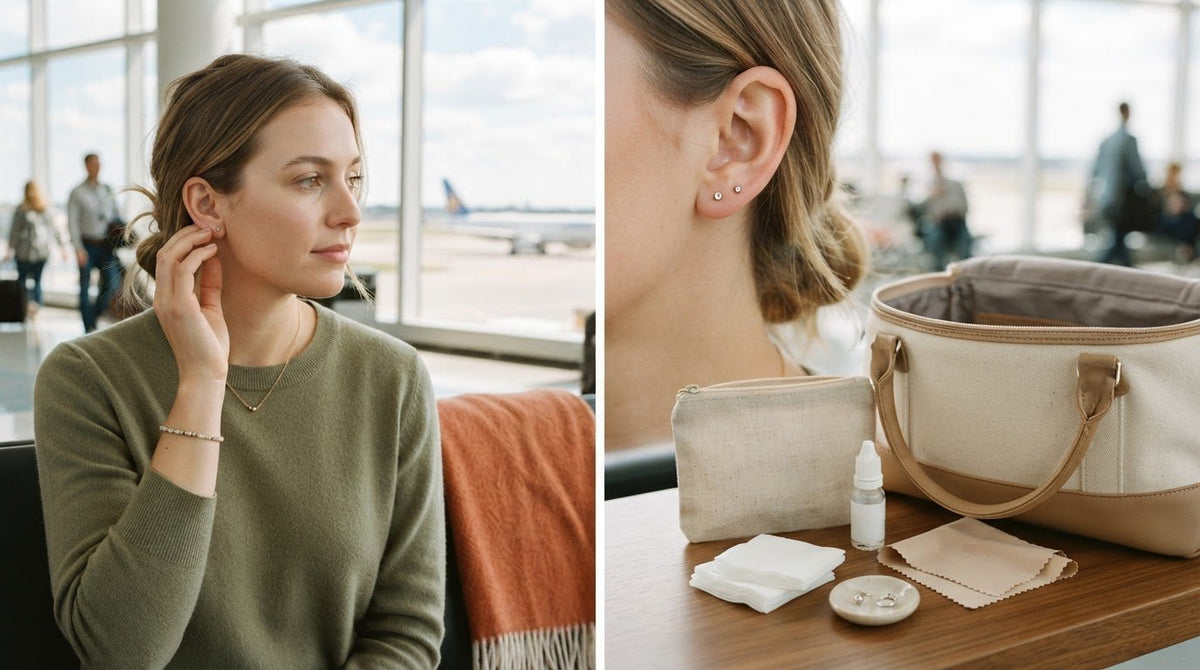
Swimming with a new piercing on holiday is best avoided while it’s healing: stay out of pools, hot tubs, the ocean, and other natural bodies of water. When traveling with new piercings, plan ahead where you can; if flying, wait at least 72 hours after getting pierced, and allow 7–14 days for the piercing to settle before your flight if possible.
It’s understandable to want to enjoy your trip, especially when plans are already in place. A little preparation can help protect a new piercing from irritation and make aftercare manageable while you’re away.
This guide explains how to care for a new piercing while traveling, what to do if swelling flares during a flight or in hot weather, and which essentials to pack. You’ll also learn how to reduce contact and irritation, recognize signs that need medical attention, and fit a simple aftercare kit into your travel routine.
Key Takeaways
- Give a fresh piercing time to settle before travel when possible, and plan around its location and healing stage.
- On flights, keep the area clean, avoid touching or adjusting the jewelry, and watch for temporary swelling or discomfort.
- Skip pools, hot tubs, and natural bodies of water while the piercing is healing.
- Pack sealed sterile saline and clean drying materials; according to the Transportation Security Administration, saline spray in hand luggage should be under 100 ml.
- Learn which signs of irritation may need prompt medical attention, and how to keep everyday travel items from rubbing against the piercing.
1. Should I up my piercing aftercare while travelling?
Yes. Keep your aftercare consistent while travelling, and give a fresh piercing time to settle before departure. Healing time varies from person to person and by piercing location. A piercing less than a week old can be especially sensitive to travel, so consider your itinerary before booking.
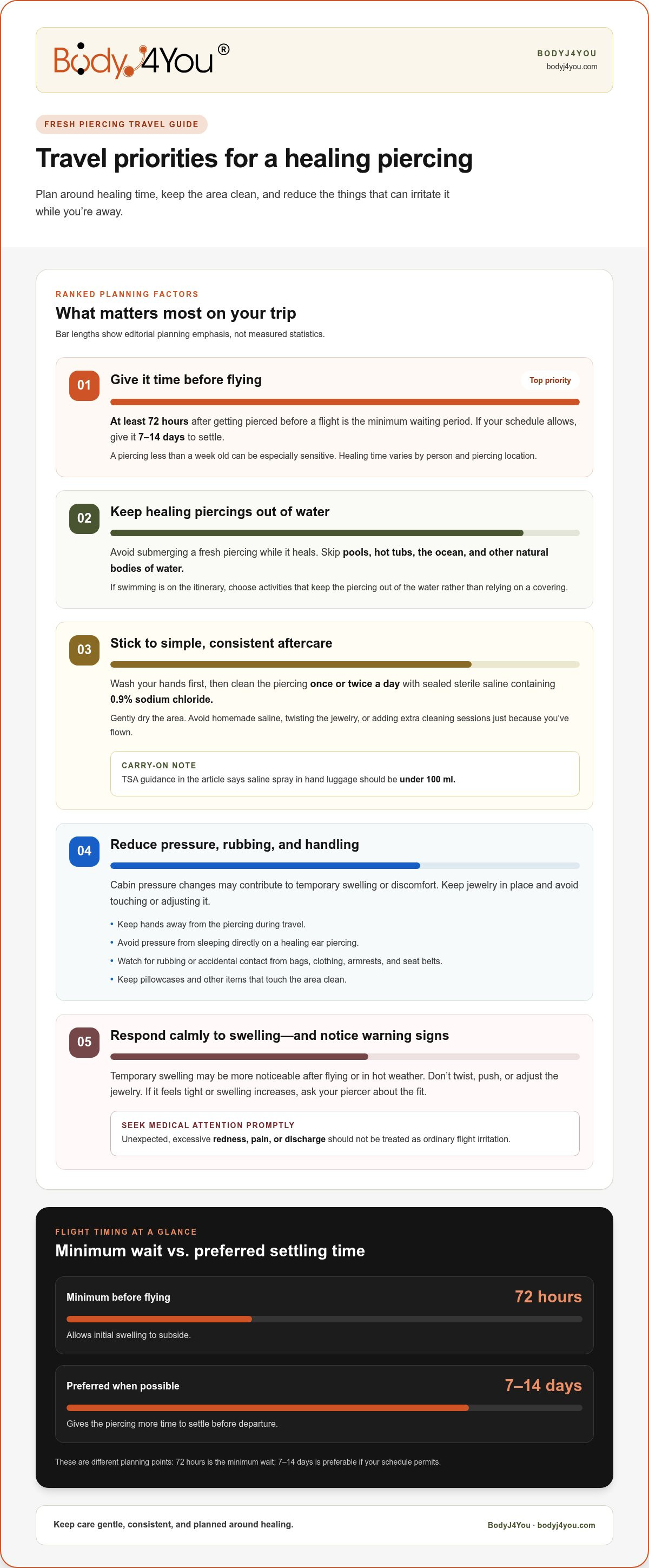
If possible, avoid travelling during the first one to two weeks after getting pierced, depending on the location. For air travel, wait at least 72 hours to allow initial swelling to subside. Allowing 7–14 days for a piercing to settle before flying is preferable when your schedule permits. These are different planning points: 72 hours is a minimum waiting period, while a longer settling window can offer more time for early tenderness to ease.
How do you clean and care for a new piercing while travelling? Wash your hands first, then clean the piercing once or twice a day with sealed sterile saline containing 0.9% sodium chloride. Avoid homemade saline, and gently dry the area afterward without twisting or moving the jewelry. A Saline Piercing Aftercare Spray can be a convenient option to pack for this routine.
Travel can affect swelling. A healing piercing may feel more swollen after a flight, and cabin pressure changes may contribute to temporary swelling or discomfort. Keep the jewelry in place, avoid unnecessary touching, and follow your usual cleaning routine rather than adding extra sessions. If the jewelry feels tight or swelling increases, ask your piercer about the fit.
Protect the area while you sleep, too. Avoid sleeping directly on a healing ear piercing, since pillow pressure can rub or compress the site. Rest on the opposite side or adjust your position so the piercing doesn’t press against bedding. Keep pillowcases and other items that touch the area clean.
Plan ahead for water activities. During early healing, keep the piercing clean and dry, and avoid submerging it. Skip pools, hot tubs, and the ocean while it heals, since these environments can expose the site to contaminants or irritants. If your holiday includes swimming, choose activities that keep the fresh piercing out of the water rather than relying on a covering.
Before leaving, pack sealed saline, clean drying materials, and supplies for a simple routine you can follow in transit. Preparation helps you maintain care during flights, hotel stays, and busy days without unnecessary handling or changes to the jewelry.
2. Flying with a fresh piercing
Flying with a fresh piercing is usually manageable, but timing and location matter. Wait at least 72 hours after getting pierced before flying, allowing initial swelling to subside. If possible, give the piercing 7–14 days to settle before departure. That longer window can be especially useful when travel involves several flights or a long itinerary.
Ask your piercer for travel guidance before departure. They can consider the piercing’s age and location, its healing progress, the jewelry, and your itinerary. A nostril piercing that feels settled on the ground may still become irritated by pressure, handling, or friction during a flight. Share your flight duration and planned activities so the advice reflects your trip.
Fresh piercings can feel more sensitive during takeoff and landing, when cabin pressure changes. Aircraft cabins are typically pressurized to an equivalent altitude between 6,000 and 8,000 feet. Pressure changes may contribute to temporary swelling or discomfort around a healing piercing, though the response depends on its location and current tenderness. Avoid twisting or adjusting the jewelry to relieve that sensation.
Drink water before, during, and after flying to stay hydrated. If you have an ear piercing and feel pressure discomfort, gently swallowing or moving your jaw may help equalize ear pressure. Keep your hands away from the piercing, especially in a crowded cabin where armrests, seat belts, or a neighboring passenger could cause accidental contact. Long flights also mean more time in a dry cabin, so keep your usual aftercare supplies accessible.
To find a reputable piercer while traveling, look for a member of the Association of Professional Piercers, whose members can assist travelers worldwide. For unexpected, excessive redness, pain, or discharge, seek medical attention promptly rather than treating a possible infection as ordinary flight irritation.
Pack sealed sterile saline in your carry-on so your cleaning routine stays practical in transit. A small, travel-ready saline aftercare spray can keep that step within reach after a flight, once your hands are clean. Avoid adding unapproved products or extra cleaning sessions simply because you’ve flown. Consistent care, gentle handling, and a realistic departure window help protect the healing process without disrupting your travel plans.
3. What if I get ear piercing swelling on the plane or in hot weather?
Temporary swelling may feel more noticeable after flying or in hot weather. If it happens, don’t twist, push, or adjust the jewelry, as this can add irritation. The guide suggests using ice to ease swelling, particularly for oral piercings. It also suggests anti-inflammatory medication such as ibuprofen before and after flying. Follow medication directions and consider your own health needs before taking it.
Jewelry fit matters when swelling is possible. Longer jewelry can leave room for swelling, but jewelry that shifts or dangles can snag on clothing, hair, or a bag strap. For travel, choose a secure piece that fits without pressing into the piercing. Internally threaded or threadless jewelry can reduce the risk of a loose end. Avoid oversized, heavy, or dangling styles while the area heals.
Material and design both count. Initial piercing jewelry may be made from surgical stainless steel grades 316L or 316LVM, or solid nickel-free gold in 14k or 18k. Flat-back labrets and small studs are practical options for travel because they sit close to the body. Secure clickers are another suggested style where suitable for the piercing. A piercer can advise whether a particular style fits your piercing and healing stage.
Can airport security or airline rules affect traveling with new piercings? Body jewelry generally doesn’t need to be removed at airport security, and most body jewelry typically doesn’t trigger metal detectors. Security staff may visually inspect a piercing, so keep the jewelry in place and answer questions calmly. Avoid changing jewelry just to pass through screening.
Can you change or remove jewelry in a new piercing before or during a trip? Don’t remove initial jewelry from a healing piercing unless removal is necessary or a medical professional advises it. Changing jewelry can disturb the healing channel, especially if the piercing is tender or swollen. If swelling makes the jewelry feel tight, don’t force it out or change it yourself.
Snags and lost pieces are easier to prevent than fix mid-trip. Keep hair, scarves, and headphones from catching on exposed jewelry, and avoid touching the piercing with unwashed hands that may transfer bacteria. If a piece comes loose, don’t put it back with unclean fingers or tools. Carry spare jewelry and clean gloves or tweezers, but use them only when needed and handle the piercing as little as possible.
4. Avoiding piercing contact and infection
Keep contact with a healing piercing to a minimum while traveling. Wash your hands before cleaning or handling the area, and don’t twist or adjust the jewelry just to check it. On a train or plane, hands touch shared surfaces such as tray tables, seat controls, and railings. Avoid touching the piercing afterward, since hands can transfer bacteria to the site.
Plan around clothing and travel gear to protect the piercing from pressure and friction. A scarf, tight collar, backpack strap, or headphone can rub against an ear or facial piercing. Choose clothing that won’t catch, keep hair away from the jewelry, and move bag straps clear of the area. Avoid sleeping directly on a fresh ear piercing, and use clean bedding at your destination.
Pay attention to everyday items, too. Wipe down your phone before holding it against a new ear piercing, and keep headphones, hats, and pillowcases clean. If a hairstylist will work around the piercing, let them know beforehand so combs and tools don’t snag it. Keep hair products away from the site, since residue may irritate sensitive tissue.
Stick to a simple routine instead of adding extra products. Wash your hands, rinse the piercing with sterile saline as directed in your aftercare routine, then dry it gently with a clean material. Don’t pick at crusting or apply makeup, sunscreen, or hair products directly over the piercing. While sightseeing, avoid touching the area after handling public transport rails, menus, or door handles.
Watch for changes beyond ordinary tenderness. Unexpected, excessive redness, increasing pain, or discharge can signal a possible infection. If these symptoms appear, seek medical attention promptly rather than trying to manage them by changing jewelry or applying unapproved treatments. Take a sudden change after a day of travel seriously, especially if several warning signs appear together.
Keep the initial jewelry in place while the piercing heals, unless removal is necessary or a medical professional advises it. Removing it without guidance can disturb the healing channel and complicate care. Avoid loose balls and hoops that may catch on clothing, bags, or bedding. If the jewelry shifts, resist repositioning it with unwashed hands; wash your hands first and handle it only when necessary.
Build these habits into your travel routine: clean hands before care, minimal handling between stops, and a quick check that clothing or equipment isn’t rubbing. In a hotel, set aftercare supplies on a clean surface rather than beside the sink or shared toiletries. These small steps help limit irritation and avoid unnecessary contact while the piercing heals.
5. Packing a piercing aftercare kit
A compact aftercare kit makes your routine practical through airport queues, flights, and hotel stays. Pack supplies you can use with clean hands and without changing your jewelry. Keep liquids sealed, store clean items separately from used ones, and place the kit somewhere accessible in your luggage. A small pouch also makes it easier to find care items without rummaging through your suitcase.
Make sterile saline the core of your kit. Choose a sealed sterile solution containing 0.9% sodium chloride, rather than mixing homemade saline on the road. According to the Transportation Security Administration, saline spray carried in hand luggage should be under 100 ml. Pack a suitably small container in your carry-on, and keep it closed between uses to protect the nozzle.
Useful items to pack include:
- Sealed sterile saline spray or pre-packaged sterile saline wipes.
- Non-woven gauze or clean paper towels for gently drying the area.
- Alcohol-free wipes for cleaning your hands or nearby surfaces, not for applying inside the piercing.
- A small mirror to help you see the piercing without repeatedly touching it.
Use a mirror to check the area, then clean it according to your usual aftercare routine. Dry it with non-woven gauze or paper towel. Avoid cotton balls and cotton swabs for drying, because loose fibers can catch on jewelry. Although swabs can be convenient for targeted cleaning, don’t rub fibers against the piercing or its jewelry.
Before departure, separate clean supplies from anything already used. For example, keep sterile wipes in a sealed pouch and place used materials in a separate bag until you can dispose of them. Don’t share towels, swabs, or saline containers with travel companions. At your destination, set the kit on a clean, dry surface before starting your routine.
Build the kit around your itinerary. For a long travel day, keep saline and drying materials in your carry-on rather than checked luggage, so you can follow your routine during a stopover. For hotel stays, bring enough sealed supplies to avoid improvising with tap water or unclean materials. Check that containers are closed and packaging is intact before use.
Keep your travel routine simple: clean hands, sterile saline, gentle drying. Shop piercing aftercare essentials to prepare a practical kit for your next trip.
BodyJ4You: Acrylic Ear Stretching Kit
BodyJ4You’s Acrylic Ear Stretching Kit is for readers interested in ear stretching, not a substitute for fresh-piercing aftercare. Keep a new piercing’s healing routine simple while away; the Saline Piercing Aftercare Spray offers a practical aftercare option to pack alongside your other essentials.
If you’re planning to stretch healed earlobes, explore the Acrylic Ear Stretching Kit or Surgical Steel Taper and Plug Kit as separate options for that goal. For bumps, the Piercing Bump Treatment Oil is another available offering, but it doesn’t replace care for possible infection. Match your choice to your piercing needs, and keep fresh-piercing care distinct from stretching.
Visit BodyJ4You to explore the available piercing and aftercare offerings.
Make your next trip easier to plan
Before booking your next getaway, consider whether your piercing’s healing stage suits the activities you have planned. A trip built around swimming, long flights, or days outdoors may call for a different schedule than a relaxed city break. Planning ahead gives you room to protect your self-expression without letting aftercare become an afterthought.
For traveling with new piercings, make a small care checklist that suits your itinerary, then pack the essentials where they’re easy to reach. BodyJ4You’s Saline Piercing Aftercare Spray can be part of that travel kit. If your next step is choosing practical aftercare supplies, explore piercing aftercare essentials.
Keep your routine gentle and let the piercing’s needs guide your plans. With thoughtful preparation, you can enjoy the journey while giving your new piercing the care it needs.
Frequently Asked Questions
Is Swimming with a New Piercing on Holiday Safe?
No. Avoid swimming while the piercing is healing, including in hotel pools, hot tubs, and the ocean. A waterproof covering doesn’t make submerging a fresh piercing safe. If your holiday plans center on water, choose activities that keep the piercing dry, such as relaxing poolside or exploring nearby sights. Resume swimming only after healing is complete, rather than relying on a calendar alone.
Should I up my piercing aftercare while travelling?
Keep aftercare steady instead of adding extra cleaning because you’re away. For example, follow your usual routine after reaching your hotel, using clean hands and your regular sterile saline. Pack supplies in a dedicated pouch, and avoid substituting hotel toiletries or shared towels. If a change in routine causes irritation, return to gentle, consistent care instead of scrubbing or applying additional products.
What if I get ear piercing swelling on the plane or in hot weather?
Leave the jewelry in place and avoid pressing or turning it. For swelling, a cool compress held gently near the area may provide comfort; don’t place ice directly on skin. Heat, pressure, and friction can make a tender piercing feel more sensitive, so move hair or clothing away from it. Seek medical attention promptly for unexpected, excessive redness, worsening pain, or discharge.
Can I go through airport security with a new piercing?
Yes, body jewelry generally doesn’t need to be removed for airport security. Most body jewelry typically won’t trigger metal detectors, although security staff may visually inspect a piercing. Keep the jewelry in place rather than removing it before screening, since taking it out can irritate a healing channel. If staff ask about it, respond calmly and follow their instructions without touching the piercing unnecessarily.
Can I take saline spray for travel in my hand luggage?
Yes, if the container meets the applicable carry-on liquid limit. The Transportation Security Administration says saline spray in hand luggage should be under 100 ml. A 4 fl oz saline spray exceeds TSA carry-on liquid limits, so don’t pack that size in hand luggage. Keep the cap secure and the bottle in a clear, resealable liquids bag if required for your journey.
Can you swim with a new piercing?
No, avoid swimming until the piercing has finished healing. That includes natural water and chlorinated pools, since submerging the healing site can expose it to irritants and contaminants. If water splashes onto the area, gently rinse it with sterile saline and dry it carefully with clean, non-woven gauze. Don’t use swimming as a test of whether the piercing is ready.
Is It Okay to Fly After Getting a Piercing?
Flying can be manageable, but give the piercing time to settle first. Waiting at least 72 hours allows initial swelling to subside; if possible, allow 7–14 days before flying. A professional piercer can consider the piercing’s location, age, healing progress, jewelry, and itinerary when advising you. For example, a long journey with multiple connections may call for more planning than a short direct flight.
Should You Get Pierced Before a Trip?
If your trip is soon, consider postponing the piercing until you return. Early healing may be harder to manage when your itinerary includes flights, swimming, or activities that put pressure on the area. A piercing less than a week old can be especially sensitive during travel. If you’ve already booked the appointment, consider how your destination and plans may affect aftercare before deciding on timing.


